Brand Refresh vs Rebrand: Key Differences & When You Need One
by Kunal Bhardwaj
10 Min Read
Published On : 9th November, 2025
- Introduction
- Subtopic-1
- Subtopic-2
- Subtopic-3
- Subtopic-3
- Conclusion
So your brand’s starting to feel... kinda stale? People scroll past your posts like they never existed, and your competitors? They look like they just stepped out of a 2026 design playbook while you’re stuck in the good ol’ 2015 vibes. Ouch.
Now here’s the thing most business owners miss: you might not need to blow everything up and start from scratch. Sometimes, a little tweak (you know, a haircut, not surgery) can totally bring your brand back to life.
See, a brand refresh and a rebrand aren’t the same beast. One saves you money and time, the other… well, it can drain both if you choose wrong. There’s a fun stat too, according to Lucidpress, Keeping your brand consistent can bump up revenue by 23%. Pretty neat, right? But hey, consistency doesn’t mean you gotta stay frozen in time like it’s 2010 forever.
Think of it like this: a refresh is just updating your wardrobe with new clothes (still your style, just sharper). A rebrand? That’s when you change your whole look, new clothes, new haircut, new name, and your old friends might walk past you without recognizing you.
And yeah, the stakes are high here. Pick wrong and you’ll either spend a fortune fixing something that wasn’t broken or stay stuck with a brand that doesn’t even represent who you’ve become. Remember how Dunkin’ Donuts dropped the “Donuts” in 2019? Total rebrand move. Google, though, just keeps giving its logo a little polish every few years (that’s a refresh done right).
By the end of this read, you’ll know exactly which side you’re on, Team Refresh or Team Rebrand. We’ll check out some real examples, dig into the costs (yep, the real numbers), and hand you a simple framework to choose without pulling your hair out.
So, ready to find out whether your brand needs a glow-up or a full-blown identity crisis? Let’s dive in!
Key Takeaways
- Brand Refresh: Updates your look while keeping core identity intact. Think logo refinement, modern colors, and updated typography. Cost: $5K-$500K depending on size.
- Rebrand: Complete transformation of identity, positioning, and sometimes even your name. Rebuilds from scratch. Cost: $25K-$5M+ depending on size.
- Choose Refresh When: Your brand is recognizable but looks dated, you're expanding without changing direction, or competitors have modernized while you haven't.
- Choose Rebrand When: You've had a major merger, reputation crisis, complete business pivot, or your current brand totally misrepresents what you do.
- Timeline Difference: Refreshes take 3-6 months. Rebrands need 6-18+ months minimum.
- Risk Factor: Refreshes are low-risk (customers adapt easily). Rebrands are high-risk (60% fail to deliver expected results).
- The Golden Rule: Most companies need refreshes, not rebrands. Don't waste money on a complete transformation when smart updates would work.
- Success Metrics: Track brand awareness, customer sentiment, website performance, and sales data for 6-12 months to measure true impact.
What Is a Brand Refresh?
Defining a Brand Refresh
A brand refresh modernizes your existing identity without abandoning what makes you recognizable. You're not starting from scratch; you're polishing what already works.
Think evolution, not revolution. Your core brand elements stay intact while outdated aspects get updated. The logo might get cleaner lines. Colors become more vibrant. Typography shifts to something contemporary.
Brand equity remains protected. Customers still recognize you instantly. That's the magic of a successful refresh.
Consider it strategic fine-tuning rather than demolition and reconstruction. You're keeping the foundation strong while giving the exterior a fresh coat of paint.
Common Elements of a Brand Refresh
What actually changes during a brand refresh? Here's what typically gets the update treatment:
Visual Identity Updates:
- Logo refinement (simplified shapes, cleaner lines)
- Modernized color palette (brighter, more digital-friendly)
- Updated typography (readable across devices)
- Refreshed iconography and graphic elements
Digital Presence Overhaul:
- Website redesign with better UX
- Social media template updates
- Email marketing template refresh
- Mobile app interface improvements
Marketing Material Modernization:
- Updated business cards and stationery
- Refreshed packaging design
- New photography style and direction
- Revised brand guidelines
Messaging Refinement:
- Tweaked tagline or slogan
- Updated brand voice (more conversational, perhaps)
- Refined mission statement
- Modernized content tone
The key? Everything still feels like you. Just better.Real-World Brand Refresh Examples
Google's Continuous Evolution
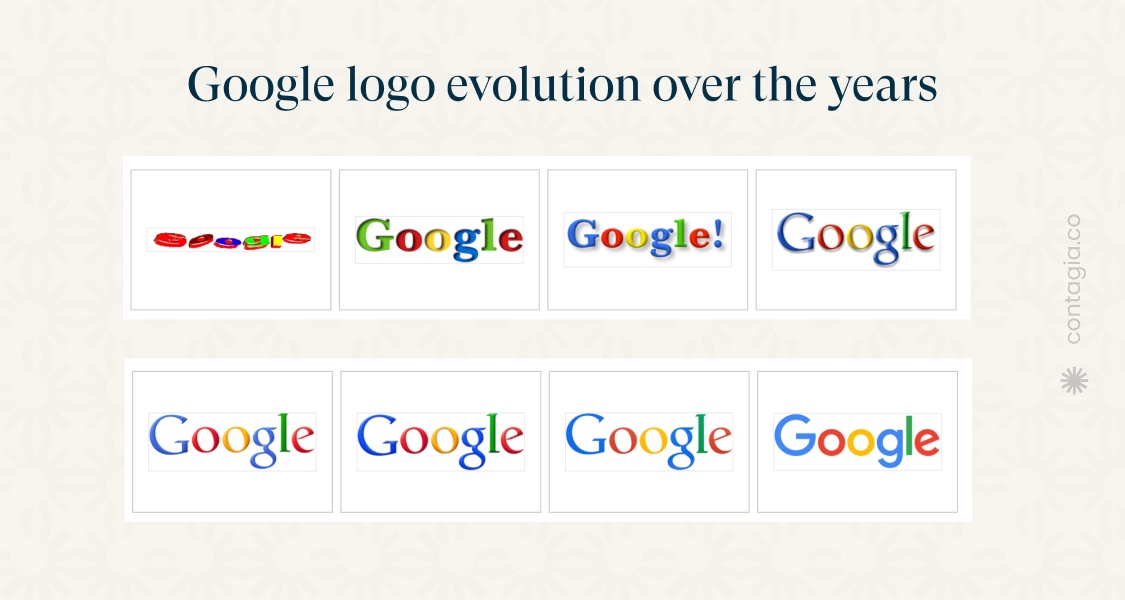
Google has refreshed its logo multiple times since 1998. The 2015 refresh shifted from serif to sans-serif typography. Simpler. Cleaner. More mobile-friendly.
Did users panic? Nope. Everyone still knew it was Google. The colors stayed, red, blue, yellow, and green. The playful spirit remained intact.Coca-Cola's Subtle Shifts
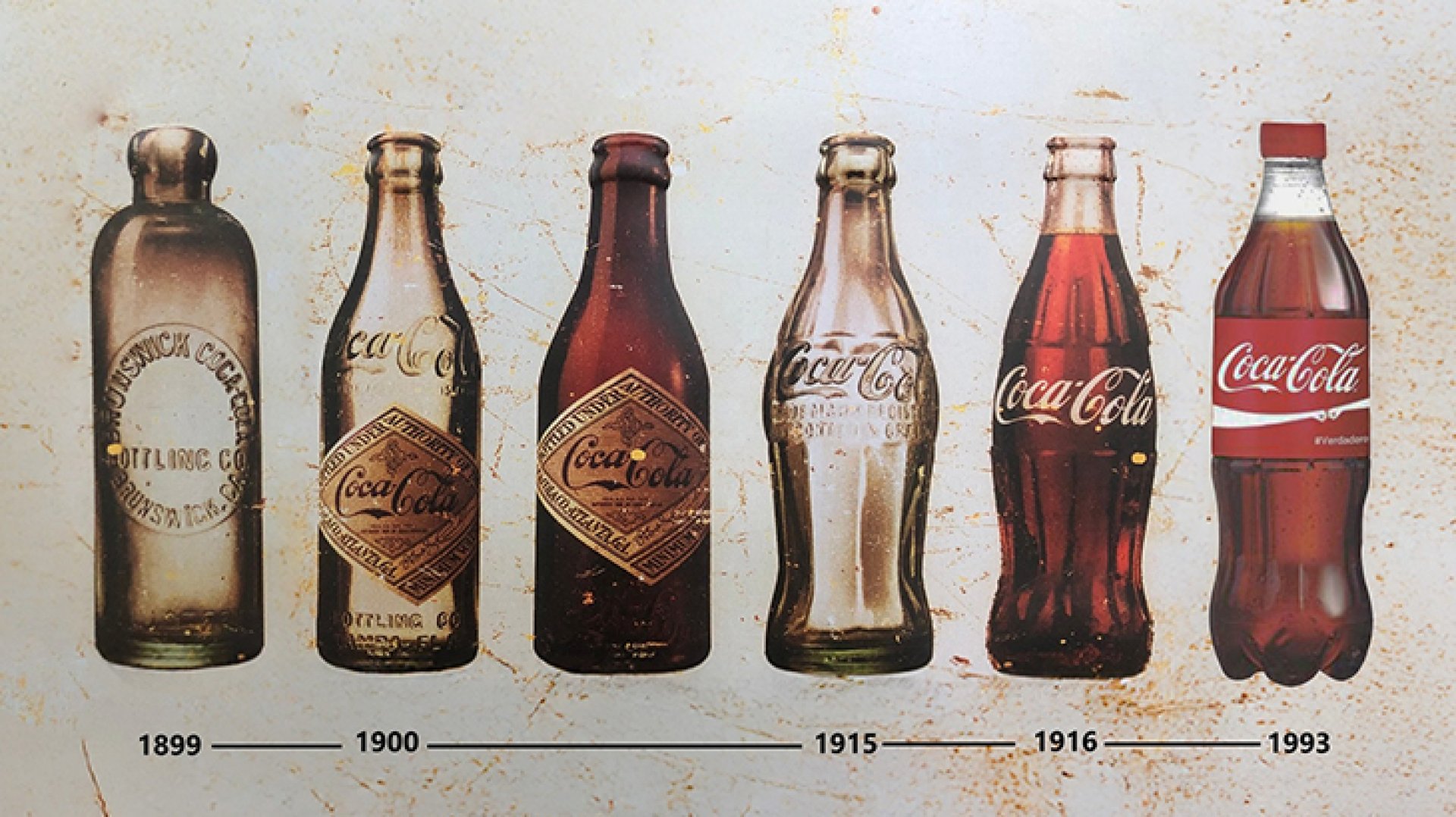
Coca-Cola has refreshed its brand countless times over 130+ years. The iconic script logo barely changes. Colors stay red and white. Yet somehow, they always feel current.
Their latest refresh focuses on unified packaging across products. Same brand, modernized presentation. That's the refresh playbook in action.Mastercard's 2016 Refresh
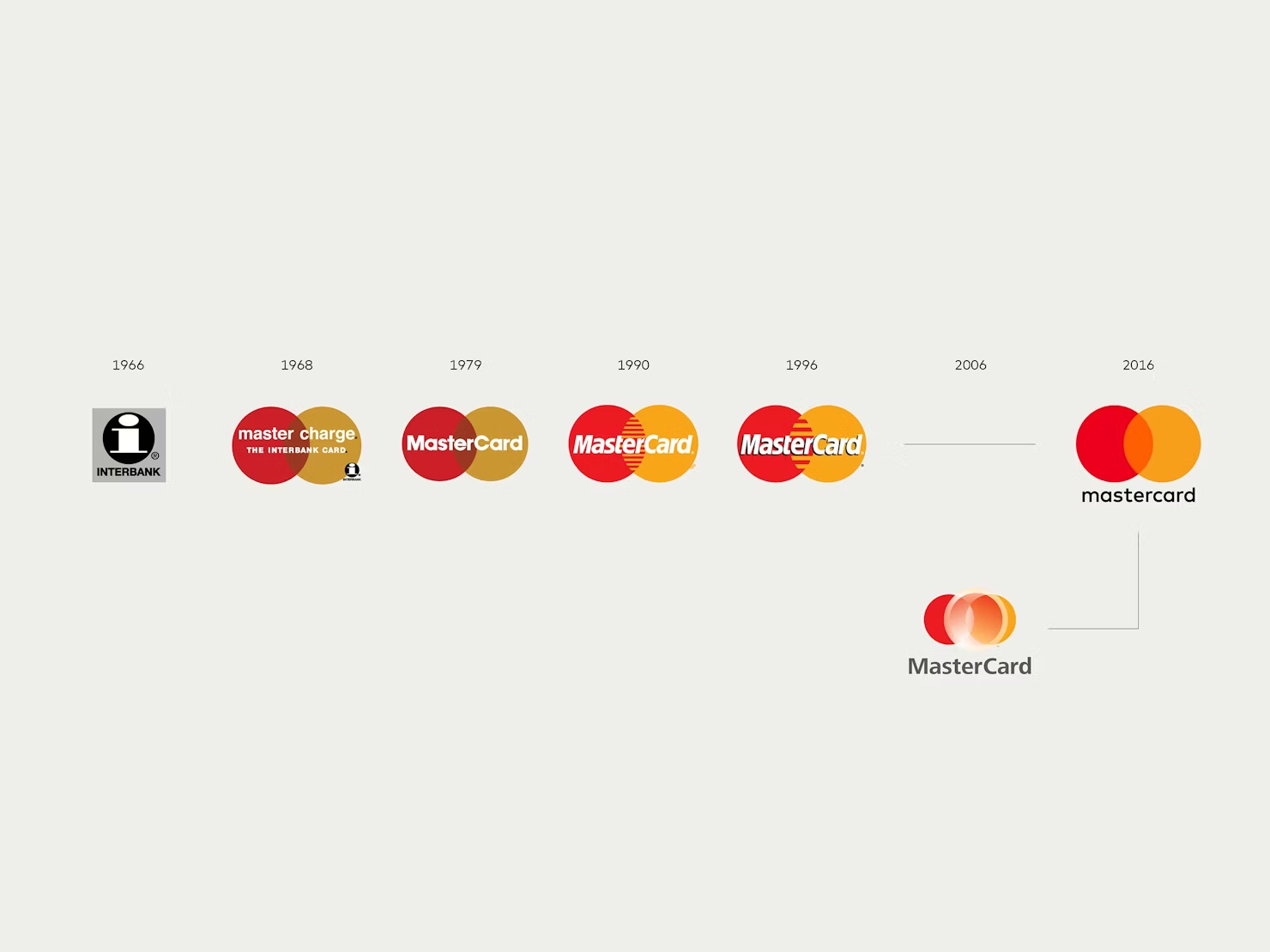
Mastercard simplified their overlapping circles and removed the company name from the logo. Why? Digital screens display simple designs better. The refresh maintained their distinctive red-and-yellow circles while adapting to modern media.
This refresh apparently cost millions(rumored), and according to Right Metric this led to an increase in their web traffic by +31% YoY.
What Is a Rebrand?
Defining a Rebrand (Full Rebranding)
A rebrand throws out the old playbook entirely. New name. New look. New positioning. Sometimes even a new audience. This isn't tweaking, it's transformation. You're fundamentally changing how the market perceives you.
Rebranding happens when:
- Your business model pivots completely
- Reputation needs total rehabilitation
- Mergers create entirely new entities
- Target demographics shift dramatically
The risk? Alienating loyal customers. The reward? Reaching audiences your old brand couldn't touch. Full rebrands cost significantly more than refreshes. We're talking six or seven figures for established companies. But sometimes there's no alternative.
Key Components of a Complete Rebrand
What gets overhauled in a total rebrand? Pretty much everything:
Identity Overhaul:
- Completely new company name (often)
- Ground-up logo redesign
- Entirely new color scheme
- Fresh typography system
- New brand personality and voice
Strategic Repositioning:
- Different target audience
- New market positioning
- Revised mission and values
- Updated company culture Fresh competitive differentiation
Customer Experience Transformation:
- Redesigned products or services
- New customer touchpoints
- Different service approach
- Updated packaging and presentation
- Revised pricing strategy
Communication Shift:
- New website from scratch
- Complete social media overhaul
- Updated marketing campaigns
- Fresh content strategy
- Different advertising approach
Key Components of a Complete Rebrand
What gets overhauled in a total rebrand? Pretty much everything:
Identity Overhaul:
- Completely new company name (often)
- Ground-up logo redesign
- Entirely new color scheme
- Fresh typography system
- New brand personality and voice
Strategic Repositioning:
- Different target audience
- New market positioning
- Revised mission and values
- Updated company culture Fresh competitive differentiation
Customer Experience Transformation:
- Redesigned products or services
- New customer touchpoints
- Different service approach
- Updated packaging and presentation
- Revised pricing strategy
Communication Shift:
- New website from scratch
- Complete social media overhaul
- Updated marketing campaigns
- Fresh content strategy
- Different advertising approach
Famous Rebrand Examples
Dunkin' (formerly Dunkin' Donuts)
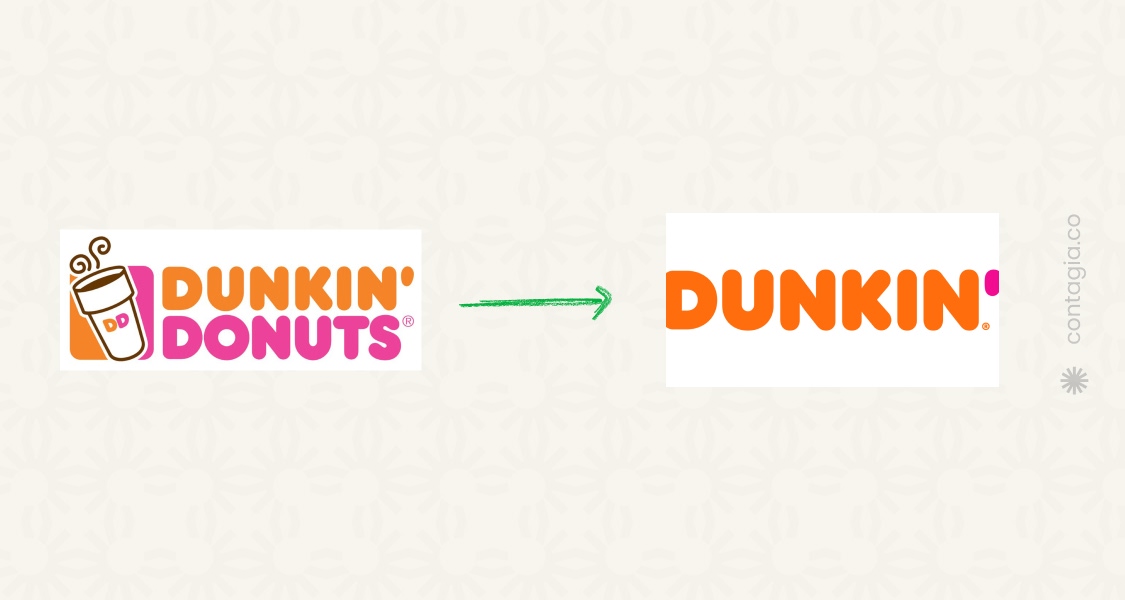
In 2019, Dunkin' Donuts became just Dunkin'. They dropped "Donuts" to signal their evolution into a beverage-led brand.
According to their CEO, the rebrand reflected their expanded menu beyond donuts. New logo. New colors. New positioning as an on-the-go lifestyle brand.
Did it work? Dunkin' reported increased digital engagement and younger customer demographics post-rebrand.
Old Spice's Dramatic Turnaround

Old Spice faced extinction in the early 2000s. Seen as your grandfather's aftershave, the brand was dying.
Their 2010 rebrand changed everything. Same name, completely different personality. The "The Man Your Man Could Smell Like" campaign repositioned them for younger men. Humorous. Irreverent. Nothing like the old Old Spice.
Sales increased 107% in one month after the rebrand launch. That's rebrand power.
Burberry's Luxury Repositioning
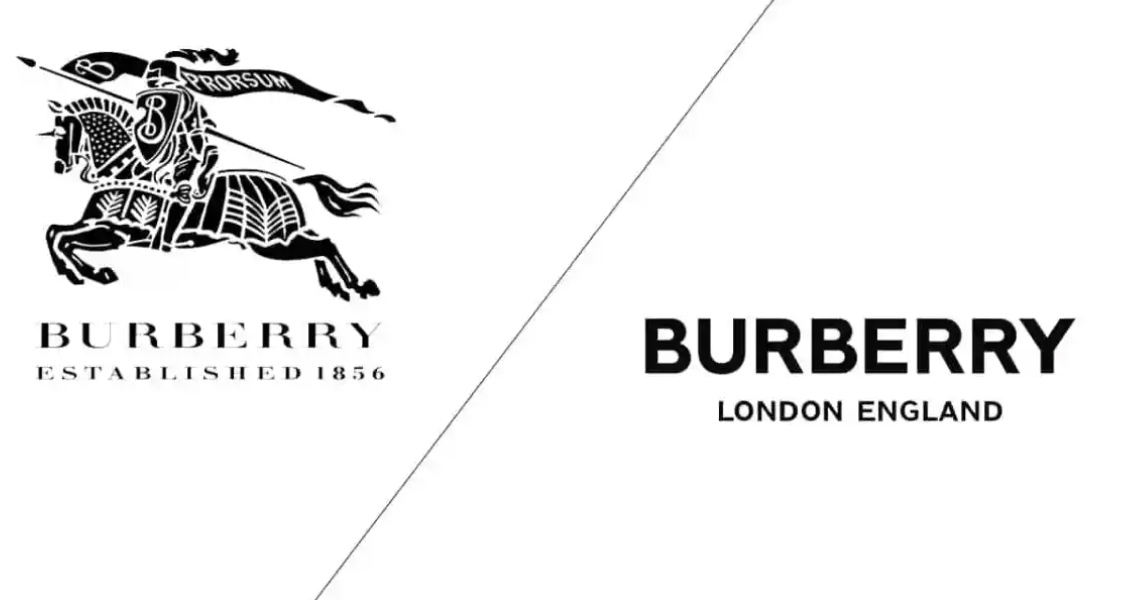
Credit: Adweek
Burberry struggled in the early 2000s when their signature check pattern became associated with counterfeit goods and negative cultural associations in the UK.
Their rebrand minimized the check pattern, elevated pricing, recruited high-fashion designers, and repositioned as ultra-luxury. By 2017, brand value increased to ~$3.5 billion.
Further, in 2018, Burberry introduced a logo refresh, which again boosted the revenue up by 10.58%. Complete transformation. Complete success.
The Key Differences Between Brand Refresh and Rebrand
Scope of Changes
Here's where brand refresh and rebrand diverge most dramatically:

A refresh keeps you recognizable. A rebrand makes you unrecognizable, intentionally.
Risk Level and Market Impact
Here's where brand refresh and rebrand diverge most dramatically:
Brand Refresh Risks (Lower):
Refreshes pose minimal danger. Customers adapt quickly to subtle visual updates. You're not asking anyone to relearn who you are.
Worst case scenario? Some traditionalists complain about the new logo. They'll adjust. Most won't even notice the changes consciously, they'll just think you look more modern.
Rebrand Risks (Higher):
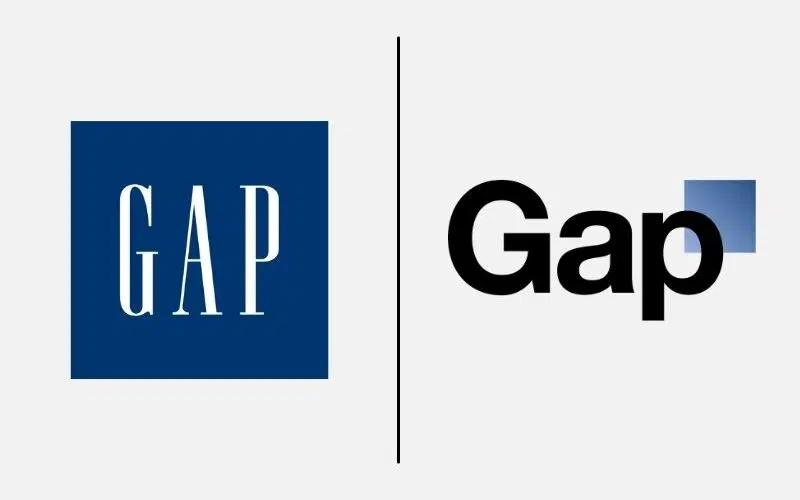
Rebrands can backfire spectacularly. Remember Gap's 2010 logo disaster? They unveiled a new logo, faced massive backlash, and reverted to their original design within one week.
Major rebrand risks include:
- Customer confusion and abandonment
- Loss of hard-earned brand equity
- Internal resistance from employees
- Negative media coverage
- Competitor opportunity during transition
- Execution inconsistencies causing mixed messages
Timelines
Brand Refresh Timeline:
Expect 3-6 months for most refreshes:
You can often phase the rollout. Update digital assets first. Replace physical materials as inventory depletes. No rush.
- Month 1: Research and audit
- Month 2: Design exploration
- Month 3: Refinement and testing
- Month 4: Guideline creation
- Month 5-6: Rollout across touchpoints
Full Rebrand Timeline:
Plan for 6-18 months minimum:
- Months 1-3: Deep research and strategy
- Months 4-6: Identity development
- Months 7-9: Testing and refinement
- Months 10-12: Internal alignment
- Months 13-15: Phased external launch
- Months 16-18: Monitoring and adjusting
Large corporations need even longer. Mastercard's name-drop rebrand took 18 months of testing across 54 countries. Rushing a rebrand invites disaster. Quality takes time.
When Does Your Company Need a Brand Refresh?
7 Signs You Need a Brand Refresh
1. Your Design Screams Last Decade
Does your website look like it's from 2008? Gradients everywhere? Drop shadows on every button?
Visual trends evolve rapidly in the digital age. What felt modern five years ago now feels ancient. If your brand looks dated, you're losing credibility with new audiences.
2. Inconsistency Plagues Your Materials
You've got seventeen versions of your logo floating around. Colors vary between platforms. Nobody knows which fonts are "official."
Brand inconsistency confuses customers and weakens recognition. A refresh establishes unified guidelines everyone can follow.
3. You're Expanding Without Changing Direction
New product lines. Additional services. Geographic expansion. But your core business stays the same.
You don't need a rebrand, just a refresh that accommodates growth while maintaining brand equity.
4. Competitors Have Modernized While You Stagnated
Scroll through your competitors' websites. Do they all look more contemporary? More professional?
If everyone in your industry has evolved except you, customers notice. A refresh brings you back to competitive parity.
5. Your Target Demographic Shifted Slightly
You used to target Millennials; now Gen Z makes up more of your audience. Or you're expanding from B2C to include B2B.
Subtle audience shifts don't require complete rebrands. Refreshing your visual style and tone can bridge the gap.
6. Strong Recognition but Tired Appearance
People know your brand. They trust you. But your visuals feel exhausted.
This is the sweet spot for refreshes. Don't throw away brand equity, just give it a facelift.
7. Customer Feedback Points to Visual Updates
"Your website is hard to navigate." "Your packaging looks cheap." "Your logo doesn't work on mobile."
Listen to your customers. When they're telling you to modernize, a refresh addresses concerns without alienating them.
Industries That Frequently Benefit from Brand Refreshes
Technology Companies
Tech evolves faster than any industry. A logo designed for desktop monitors in 2010 fails miserably on smartphones in 2025.
Apple refreshes its visual language regularly. Microsoft evolved from that colorful Windows logo to clean, modern design. Netflix has refined its identity multiple times.
Tech companies can't afford to look outdated when they're selling innovation.
Retail and Consumer Goods
Fashion and food brands refresh constantly to stay relevant. Packaging trends shift. Shopping behaviors change. E-commerce demands different visual approaches than retail.
Pepsi has refreshed its logo over 11 times since 1898. Each refresh keeps them contemporary without abandoning their core identity.
Financial Services
Banks and insurance companies refresh to convey security while appearing modern. They're fighting perceptions of being stuffy and old-fashioned.
Chase Bank, Wells Fargo, and American Express have all refreshed multiple times. They're signaling trust through timeless design that still feels current.
When Does Your Company Need a Full Rebrand?
6 Critical Signs You Need a Rebrand
1. Major Merger or Acquisition
Two companies become one. You can't just slap logos together and call it done.
When JPMorgan merged with Chase Manhattan Bank in 2000, a complete rebrand created JPMorgan Chase. New identity. New positioning. One unified brand.
2. Reputation Crisis Demands Fresh Start
Sometimes your brand becomes toxic. Scandals. Quality disasters. Public relations nightmares.
Philip Morris Companies rebranded to Altria Group in 2003 to distance from tobacco industry negativity. The rebrand helped them diversify beyond cigarettes.
3. Business Model Transformed Completely
You started selling books online. Now you sell everything plus cloud computing services.
Amazon didn't just refresh when they expanded, though their core brand stayed, their positioning evolved from bookstore to "everything store" through strategic branding.
4. Your Name No Longer Fits What You Do
Remember when Netflix mailed DVDs? Their name still worked when they shifted to streaming. But Dunkin' Donuts needed to drop "Donuts" when beverages became primary.
If your company name limits perception or confuses customers about your offerings, rebrand.
5. Target Audience Changed Dramatically
You sold to retirees; now you're targeting Gen Z. Or you pivoted from B2C to B2B enterprise.
Complete audience shifts require complete brand transformations. Different demographics respond to different visual languages, messaging, and brand personalities.
6. Entering Entirely New Markets or Industries
Expanding into international markets with different cultural expectations? Moving from healthcare to technology?
Different industries have different branding expectations. Sometimes your current brand won't translate or resonate. A rebrand adapts to new territory.
Questions to Ask Before Rebranding
Can we accomplish goals with a refresh instead?
Be honest. Most companies overestimate their need for complete rebrands. Could updating visuals and messaging achieve 80% of your goals for 20% of the cost?
Explore refresh options thoroughly before committing to rebrand investment and risk.
Do we have sufficient budget and resources?
Rebrands demand serious money. Do you have the funds not just for design work but for implementation across every touchpoint?
Half-executed rebrands confuse customers worse than no rebrand at all. All-in or don't start.
Is leadership genuinely committed long-term?
Rebrands take months or years. Leadership must champion the process even when it gets difficult.
Without CEO-level commitment, rebrands stall. Internal politics derail progress. Money gets wasted.
What's our specific competitive positioning goal?
"We want to look modern" isn't strategy. Why are you rebranding? What market position are you claiming?
According to brand consultant Marty Neumeier, positioning drives brand decisions. Without clear positioning, you're redesigning in a vacuum.
How will we communicate changes to customers?
Customers need preparation for major brand changes. What's your communication plan? How will you explain the transformation?
Tropicana's 2009 rebrand failed partly because they didn't prepare customers for dramatic packaging changes. Sales dropped 20% in two months.
Brand Refresh vs Rebrand: How to Make the Right Choice
Decision-Making Framework
Use this framework to determine whether you need a brand refresh or rebrand:
Step 1: Assess Brand Equity
Do customers recognize your brand? Is there goodwill attached to your current identity?
- High brand equity → Lean toward refresh
- Low/negative brand equity → Consider rebrand
Step 2: Evaluate Business Changes
Has your core business changed or stayed consistent?
- Same core business → Refresh likely sufficient
- Fundamentally different business → Rebrand necessary
Step 3: Analyze Audience Shift
Are you targeting the same people or completely different demographics?
- Same/similar audience → Refresh works
- Entirely different audience → Rebrand required
Step 4: Calculate Budget Reality
What can you actually afford to execute properly?
- Limited budget → Refresh
- Substantial budget → Either option viable
Step 5: Measure Urgency
How quickly do you need results?
- Moderate timeline acceptable → Refresh (3-6 months)
- Long-term transformation → Rebrand (6-18+ months)
Questions to Guide Your Decision
Ask yourself these critical questions:
About Your Current Brand:
- Do customers still recognize and trust our brand?
- Does our current brand accurately represent who we are today?
- Can our existing brand support our growth plans?
- Is our brand positioning still relevant to our market?
About Your Goals:
- Are we modernizing or fundamentally changing?
- Do we want evolution or revolution?
- Are we fixing problems or creating something new?
- Will our current customers embrace dramatic change?
About Resources:
- Can we fund a complete rebrand properly?
- Do we have time for an extended rebrand process?
- Is our team ready for transformation challenges?
- Can we execute consistently across all touchpoints?
If you answered "yes" to most current brand questions and "no" to most goal questions, you likely need a refresh. Conversely, multiple "no" answers about your current brand plus "yes" answers about goals suggest a rebrand.
Frequently Asked Questions About Brand Refresh and Rebrand
How much does a brand refresh cost compared to a rebrand?
Brand refreshes typically cost 20-40% of full rebrand expenses. Small businesses spend $5,000-$25,000 on refreshes versus $25,000-$100,000 on rebrands. Mid-size companies invest $25,000-$100,000 for refreshes compared to $100,000-$500,000 for complete rebrands. Large corporations may spend $100,000-$500,000 refreshing versus $500,000-$5,000,000+ rebranding. The cost difference reflects the scope. Refreshes work with existing brand equity. Rebrands build from zero.
Can a small business afford a rebrand?
Yes, but scale appropriately.
Small business rebrands don't need corporate budgets. Focus on essentials:
- Professional logo design ($2,000-$10,000)
- Basic brand guidelines ($1,000-$5,000)
- Website redesign ($5,000-$20,000)
- Initial marketing materials ($2,000-$5,000)
We, at Contagia offer a free audit to help in deciding what would be an ideal next step for your company based on your needs and requirements. Plus, we have different packages that cover from a friendly pricing for startups that want refresh to high-end packages that comprehensively cover all the nuances for a full rebrand.
How often should companies refresh their brand?
Most brands refresh every 5-10 years. Technology companies refresh more frequently (3-5 years) due to rapid industry evolution. Traditional industries like banking or law refresh less often (7-15 years). Monitor your industry. When most competitors have modernized and you haven't, it's time.
Conclusion
Brand refreshes modernize your existing identity. They're perfect when you've got strong brand equity but need visual updates. Lower cost. Lower risk. Faster execution. Full rebrands transform everything. They're necessary when your business fundamentally changes, your reputation needs rehabilitation, or your current brand completely misrepresents who you are. Higher investment. Higher stakes. Longer timeline.
Most companies need refreshes, not rebrands. Don't let ego or boredom drive expensive transformation when smart updates would suffice. Ask yourself honestly: Are we evolving or revolving? Modernizing or reinventing? Your answer determines your path.
The companies that succeed understand one crucial truth: great brands balance consistency with evolution. They don't change for change's sake. They don't cling to outdated identities out of fear. They assess strategically. They invest wisely. They execute deliberately.
Whether you're refreshing or rebranding, base decisions on business needs, not trends or personal preferences. Listen to customers. Test thoroughly. Commit fully once you decide. Your brand is your most valuable asset. Treat it accordingly.
Ready to evaluate your brand? Mail us and and we will send you a free yet comprehensive Audit. And start evaluating with Contagia's Revamp Audit. Then make your choice, refresh or rebrand, with confidence and clarity.
The difference between a brand refresh and a rebrand might seem subtle at first glance. But now you know better. You understand the strategic, financial, and practical distinctions that determine which path leads to success. Choose wisely. Your brand's future depends on it!