Video Funnels for SaaS: Complete Guide to Boost Conversions in 2026
by Naeem
19 Min Read
Published On : 5th January, 2026
- Introduction
- Subtopic-1
- Subtopic-2
- Subtopic-3
- Subtopic-3
- Conclusion
Customer acquisition is notoriously expensive in SaaS, and many prospects drop off before completing the sales process. Video marketing helps address this challenge, brands that integrate video across their funnel consistently report faster growth and stronger engagement than those relying on text alone.
Multiple academic studies (e.g., Romi 2023; Chen 2024) find that video marketing significantly improves consumer purchase-intention and engagement compared to traditional formats. For SaaS companies, applying video across the funnel offers a credible tactic for accelerating growth and strengthening conversion momentum.
Traditional SaaS marketing funnels struggle with a fundamental problem. They're built on static content that fails to capture attention in our video-first world. Your prospects spend over 100 minutes daily watching online videos, yet most SaaS companies still rely on lengthy whitepapers and text-heavy landing pages to explain complex software solutions.
Video funnels for SaaS transform this antiquated approach into an engaging customer journey that mirrors how people naturally consume information today. Instead of forcing prospects to read through dense feature lists, you'll guide them through visual demonstrations that showcase your product's value within seconds.
This comprehensive guide reveals exactly how successful SaaS companies structure their video marketing funnels from initial awareness through customer onboarding. You'll discover the specific video types that convert at each funnel stage, learn which tools streamline production without breaking your budget, and implement proven frameworks that industry leaders use to reduce customer acquisition costs by up to 40%.
Whether you're launching your first SaaS product or scaling an established platform, these video funnel strategies will help you build predictable growth engines that convert prospects into loyal customers. No fluff, no theory – just actionable tactics you can implement immediately to transform your marketing results.
Key Takeaways
Why Video Wins: Your prospects process visual information 60,000x faster than text and spend 100+ minutes daily watching videos. Yet most SaaS companies still rely on static content to explain complex software solutions. Agencies like Contagia leverage this neurological advantage by designing video content that mirrors audience behavior, ensuring your brand message isn’t just seen, but remembered.
The 5-Stage Framework:
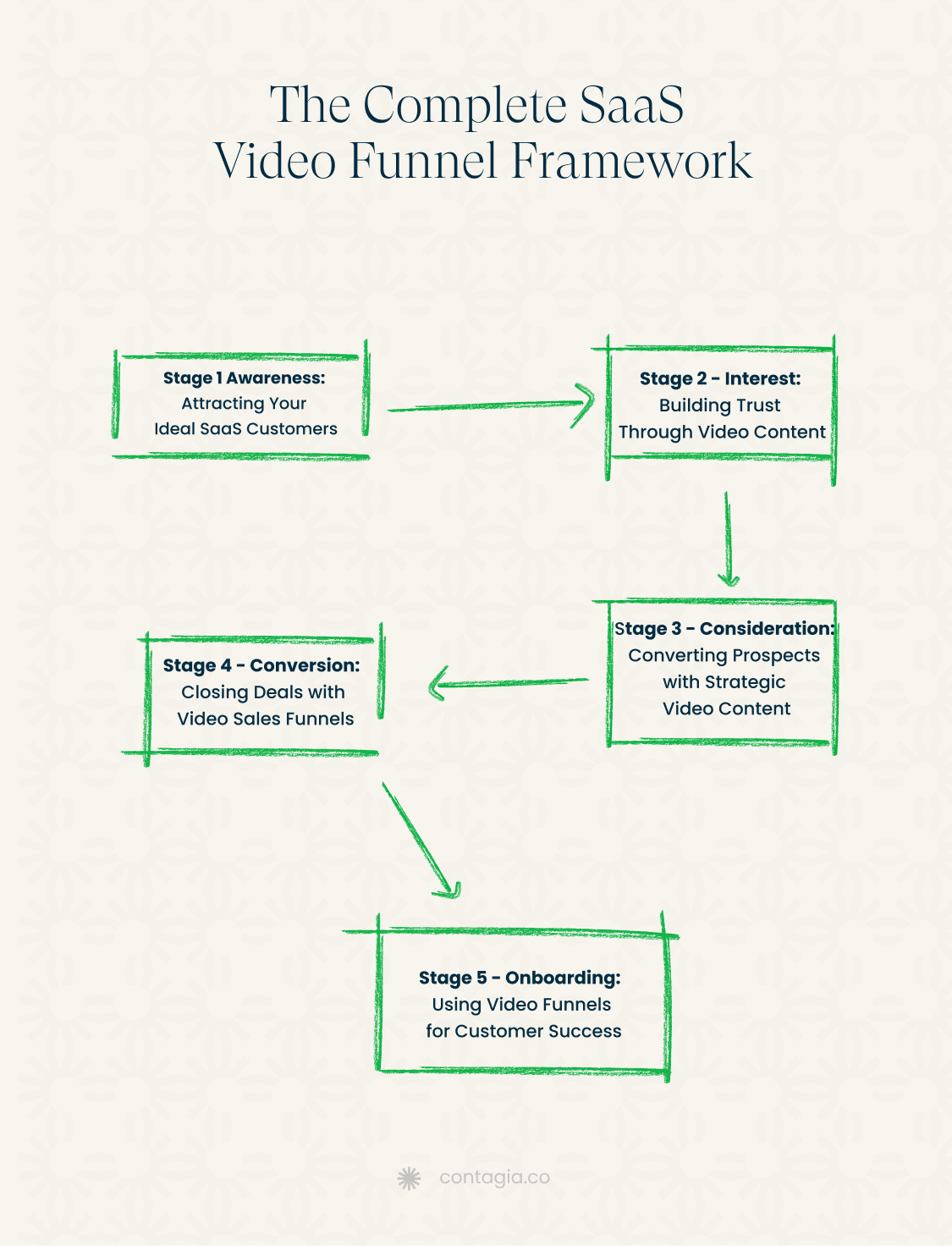
- Awareness: Educational videos that identify industry problems (not product features)
- Interest: Product demos and customer testimonials that build trust
- Consideration: Free trial videos and webinars that overcome objections
- Conversion: Personalized sales videos that close deals faster
- Onboarding: Tutorial sequences that increase customer retention by 37%
Essential Video Types:
- Explainer videos for complex concept simplification
- Demo videos showing real software workflows
- Testimonial videos providing social proof (12x more influential than written reviews)
- Educational content establishes thought leadership
Implementation Strategy:
- Month 1: Plan and audit current content gaps
- Month 2-3: Create one video per funnel stage and test performance
- Month 4+: Scale successful formats while optimizing underperformers
Key Metrics to Track: Awareness, Interest & Conversions
Budget Reality: Allocate 15-25% of the marketing budget to video content. Expect 6-12 months for ROI realization with average returns of $16 per dollar invested.
Quick Win: Start this week with one educational video addressing your prospects' biggest challenge. This single piece of content will demonstrate video's power while laying your funnel foundation.
Bottom Line: Video funnels aren't optional anymore - they're essential infrastructure for competitive SaaS growth. Your prospects are already consuming video content daily. The only question is whether you'll reach them before your competitors do.
What Are Video Funnels for SaaS Companies?
Understanding SaaS Video Marketing Funnels
Video funnels for SaaS represent a strategic approach to customer acquisition that leverages visual storytelling throughout every stage of the buyer's journey. Unlike traditional marketing funnels that rely heavily on written content, video funnels use dynamic visual elements to communicate complex software benefits in digestible formats.
Video funnels for SaaS represent a strategic approach to customer acquisition that leverages visual storytelling throughout every stage of the buyer's journey. Unlike traditional marketing funnels that rely heavily on written content, video funnels use dynamic visual elements to communicate complex software benefits in digestible formats.
When executed well, a video funnel acts like your digital salesperson, working around the clock: it raises awareness of hidden challenges, showcases your solution through guided product-walkthroughs, and eases new users into activation. Industry surveys show that more than nine in ten businesses now use video as a marketing tool—up from around two-thirds a few years ago. As video becomes a standard for engagement and education, your SaaS funnel can’t afford to leave it out.
The fundamental difference between SaaS video marketing funnels and conventional approaches lies in their ability to compress complex decision-making processes into engaging visual narratives. Where traditional funnels might require prospects to read through multiple blog posts and case studies, video funnels deliver the same information through compelling visual demonstrations that prospects can consume during their morning coffee break.
Key components that make video funnels effective include:
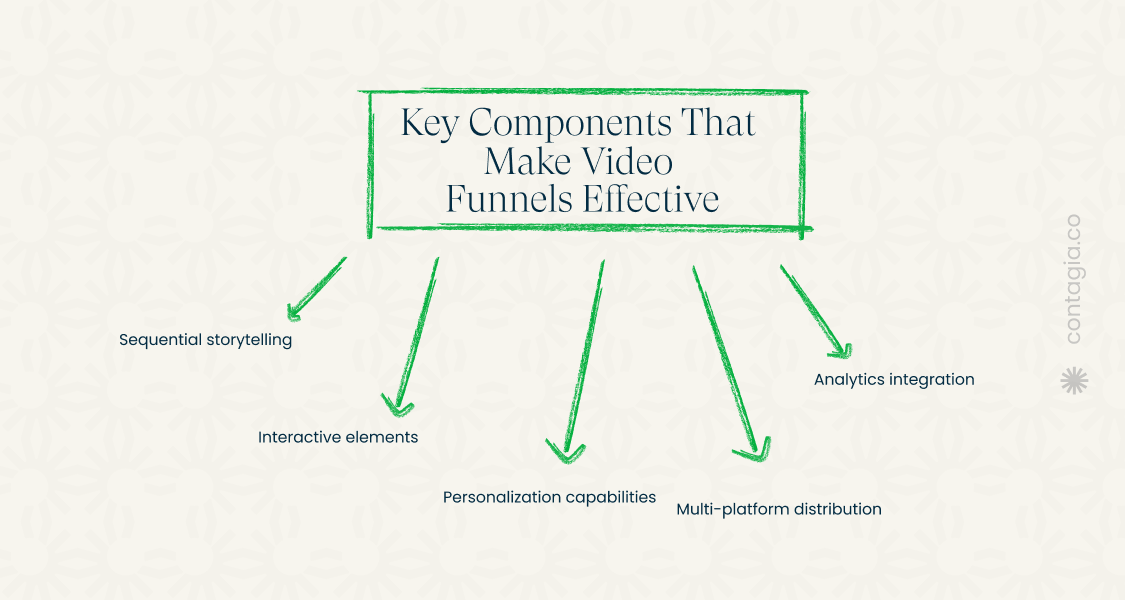
Studies across marketing and advertising show that companies using structured video funnels often achieve stronger conversion outcomes. When video content is mapped deliberately across the SaaS funnel—from awareness explainers to onboarding walkthroughs—it drives clearer understanding and higher engagement than static formats alone. Structured video funnels don’t just inform; they convert.
Why Video Funnels Work Better Than Text-Based Funnels
Visual content facilitates faster communication and enhances retention. Research in visual science demonstrates that the human brain processes and retains visual information more effectively than textual data. This neurological advantage explains why video content consistently outperforms written materials in engagement metrics across all industries.
Modern B2B buyers now prefer to research independently—comparing options, watching demos, and consuming educational content—long before they speak with a sales representative. A well-structured video funnel supports this self-service preference by delivering product insights and value demonstrations upfront, meeting prospects where they already are: online and in control of their buying process.
Trust-building through visual communication creates emotional connections that text simply cannot replicate. When prospects see real people demonstrating your software or sharing success stories, they form a sense of familiarity and trust. This comes from a psychological effect known as parasocial interaction—the one-sided connection viewers feel toward on-screen presenters.
Research shows such interactions can enhance credibility and emotional engagement, helping video testimonials outperform written reviews in building confidence and driving action.
The complexity inherent in SaaS products presents unique marketing challenges. Most software solutions solve multifaceted business problems that require detailed explanation. Video demonstrations excel at breaking down complex workflows into understandable visual sequences. Instead of describing how your project management software integrates with existing tools, you can show the integration process in real-time, eliminating confusion and accelerating decision-making.
Statistical evidence consistently underscores the performance advantage of video funnels.Across independent industry analyses, video-based content has been shown to drive significantly higher engagement and conversion rates than text-only approaches.For instance, marketing performance studies have found that including video in emails can dramatically improve click-through rates, while video-embedded landing pages typically convert visitors at a substantially higher rate than static ones.
These patterns reinforce video’s role as one of the most effective assets in SaaS funnel strategy.
The Complete SaaS Video Funnel Framework: Awareness to Onboarding
Stage 1 - Awareness: Attracting Your Ideal SaaS Customers
Problem-focused video content strategies form the foundation of successful awareness campaigns. Your prospects aren't searching for your specific software solution – they're struggling with business challenges that your product eventually solves. Creating educational content that addresses these pain points positions your brand as a helpful resource long before introducing your product.
Educational explainer videos should focus on industry-wide problems rather than product features. For example, if you're marketing accounting software, create videos about "Why 73% of Small Businesses Fail Due to Cash Flow Problems" instead of "Our Advanced Reporting Features." This approach attracts viewers who aren't yet aware they need your specific solution.
Backlinko’s large-scale analysis of 1.3 million YouTube videos highlights that high-engagement content often shares common traits—strong viewer retention, meaningful value delivery, and authentic presentation. Educational or problem-solving videos tend to attract more organic engagement than overtly promotional content, amplifying brand awareness without extra advertising spend.
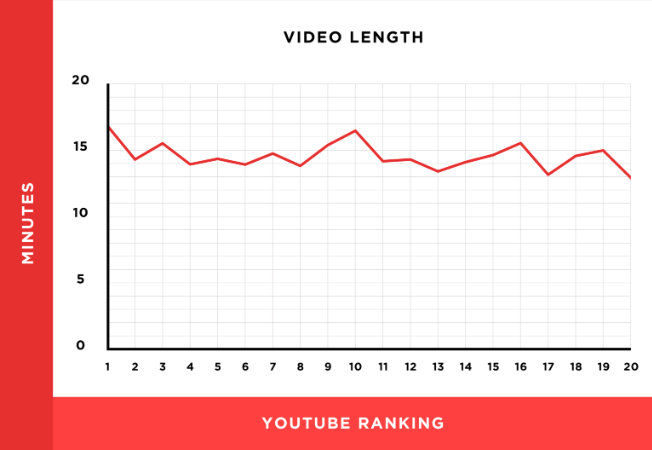
Image credit: backlinko.com
Industry problem identification videos work particularly well for B2B SaaS companies because they demonstrate thought leadership while educating prospects. These videos typically perform best when they:
- Present original research or data analysis relevant to your target industry
- Feature interviews with industry experts or satisfied customers
- Offer actionable insights that viewers can implement immediately
- Include subtle brand mentions without heavy-handed promotion
Distribution channels for awareness videos require strategic selection based on where your ideal customers consume content.LinkedIn consistently ranks as the leading B2B engagement platform, particularly for professional software and service brands. Meanwhile, YouTube remains the go-to channel for educational content that reaches wider audiences.
Choosing the right mix of platforms ensures your awareness videos meet prospects where they already consume information—balancing reach with relevance.
Metrics to track at the awareness stage include view counts, engagement rates, social shares, and increases in brand mentions. Yet, one of the most meaningful indicators of video performance is the view-through rate — the percentage of viewers who continue watching past the opening seconds.
Meta’s research highlights that sustained viewer attention early in a video strongly correlates with higher engagement and conversion intent later in the customer journey.
Stage 2 - Interest: Building Trust Through Video Content
Product demonstration videos serve as your digital showroom, allowing prospects to experience your software's capabilities without commitment. Unlike static screenshots or written descriptions, video demos showcase real workflows and use cases that resonate with specific audience segments.
Effective demo videos follow the "Show, Don't Tell" principle. Instead of listing features, demonstrate how those features solve actual business problems. Wistia's analysis of over 500,000 business videos shows that product demos perform best when they're between 60-90 seconds long and focus on single use cases rather than comprehensive feature overviews.
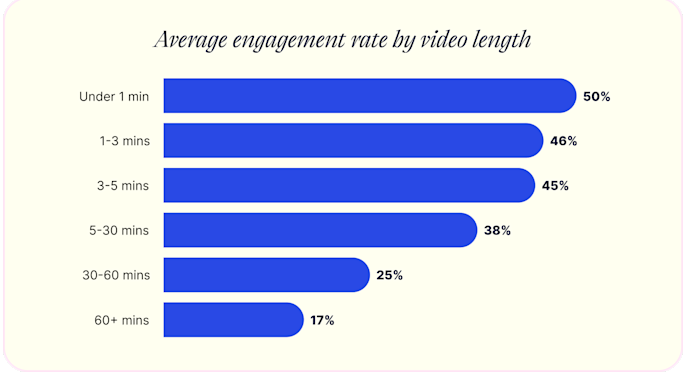
Image credit: wistia.com
Feature overview videos should highlight your software's most compelling capabilities while maintaining focus on user benefits. The most successful SaaS companies create separate videos for different user personas, ensuring that marketing managers see marketing-relevant features while IT administrators see technical capabilities.
Use case scenario videos demonstrate your product solving real business challenges. These videos work particularly well because they help prospects envision themselves using your solution. Studies in B2B marketing indicate that prospects who watch use-case or problem-solution videos are significantly more inclined to request product demos or trials. These videos help potential buyers picture real-world applications of your solution, turning abstract features into tangible value.
Social proof through video testimonials builds credibility more effectively than written reviews. Nielsen's Global Trust in Advertising Report found that 92% of consumers trust peer recommendations over traditional advertising. Video testimonials amplify this trust because viewers can observe authentic emotions and reactions from satisfied customers
Customer success stories should follow a structured narrative format: challenge, solution, results. The most compelling testimonials include specific metrics and quantifiable outcomes. For example, "MailChimp helped us increase email open rates by 23% within three months" carries more weight than "MailChimp improved our email marketing."
Educational content that positions expertise establishes your company as an industry authority while nurturing prospect relationships. According to the Content Marketing Institute’s B2B Content Marketing Report, video and educational materials remain among the most effective content types for engaging audiences and driving qualified leads.
Stage 3 - Consideration: Converting Prospects with Strategic Video Content
Free trial signup videos must overcome the primary objection preventing conversion: uncertainty about value delivery. These videos should emphasize risk-free benefits while addressing common concerns about implementation complexity or learning curves.
Benefit-focused promotional videos work best when they highlight transformation rather than features. Instead of explaining what your software does, show what users accomplish with your software. Studies on conversion optimization consistently show that emphasizing outcomes over product specifications drives stronger engagement and trial sign-ups.
Risk-free trial explanations should address specific anxieties that prevent prospects from converting. Common concerns include data security, implementation difficulty, and cancellation processes. Creating short explanatory videos that address these objections removes psychological barriers to trial signups.
Feature highlight reels showcase your software's most impressive capabilities in rapid succession. These videos work particularly well for complex platforms with numerous features. Keep highlight reels under 60 seconds and focus on visual demonstrations rather than verbal explanations.
Webinar and demo scheduling videos create anticipation while providing preview value. These videos should tease the content prospects will receive during live sessions while making scheduling as frictionless as possible. They tend to drive stronger attendance and engagement. Focus on clear value communication and an easy call-to-action to maximize participation.
Retargeting video strategies re-engage prospects who showed initial interest but didn't convert. These videos should acknowledge previous interactions while providing additional value or addressing potential objections. Facebook's retargeting algorithms favor video content, delivering 10x higher engagement rates than static retargeting ads.
Stage 4 - Conversion: Closing Deals with Video Sales Funnels
Personalized video outreach helps transform cold sales interactions into genuine, human-centered conversations. By tailoring messages to individual prospects and showing authentic attention to their needs, sales teams can significantly improve response and conversion rates compared to traditional outreach methods.
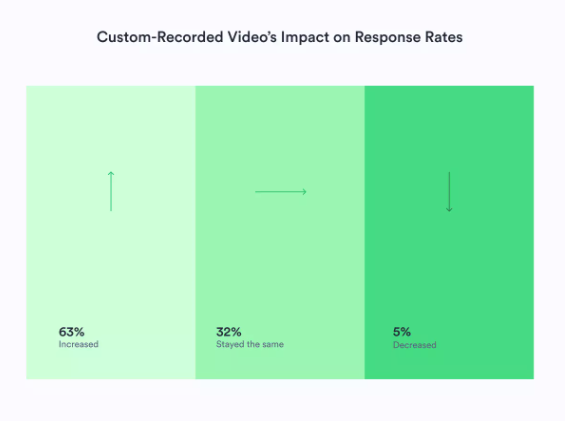
Image credit: vidyard.com
Custom demo videos for prospects address specific use cases relevant to individual companies. These videos demonstrate your software solving problems unique to the prospect's industry or business model. The investment in custom content pays dividends through higher close rates and shorter sales cycles.
Follow-up video messages maintain momentum between sales conversations while providing additional value. These videos might address questions raised during previous calls, share relevant case studies, or provide technical specifications requested by evaluation teams.
Sales team video tools and strategies streamline the creation and distribution of personalized content. Tools like Loom, Vidyard, and BombBomb enable sales representatives to create professional-quality videos without technical expertise. Integrating personalized videos into sales outreach helps teams communicate more effectively, build trust faster, and close deals more efficiently than relying on traditional methods like cold calls or generic emails.
Interactive video proposals combine traditional proposal elements with engaging visual presentations. These videos walk prospects through pricing, implementation timelines, and expected outcomes while maintaining personal connection throughout the decision-making process.
Stage 5 - Onboarding: Using Video Funnels for Customer Success
Welcome video sequences set positive expectations while reducing new customer anxiety. These videos should celebrate the customer's decision while providing clear next steps for implementation, helping improve satisfaction and long-term engagement.
Platform introduction videos provide high-level overviews that help new users understand your software's structure and capabilities. These videos should focus on quick wins rather than comprehensive training. Most users prefer multiple short videos over single lengthy tutorials.
Getting started tutorials guide new customers through essential setup processes. These videos should follow logical sequences that mirror natural user workflows. Interactive elements like progress tracking and completion badges increase engagement and completion rates.
Training and education videos develop customer expertise while increasing product adoption. When customers clearly understand how to use your solution, they tend to engage more consistently and deliver greater long-term value to your business.
Support and troubleshooting videos reduce support ticket volume while improving customer satisfaction.Research across customer experience platforms consistently shows that strong self-service content — including visual guides and tutorials — resolves most routine support issues without live assistance.
Essential Types of Videos for SaaS Marketing Funnels
Explainer Videos That Convert
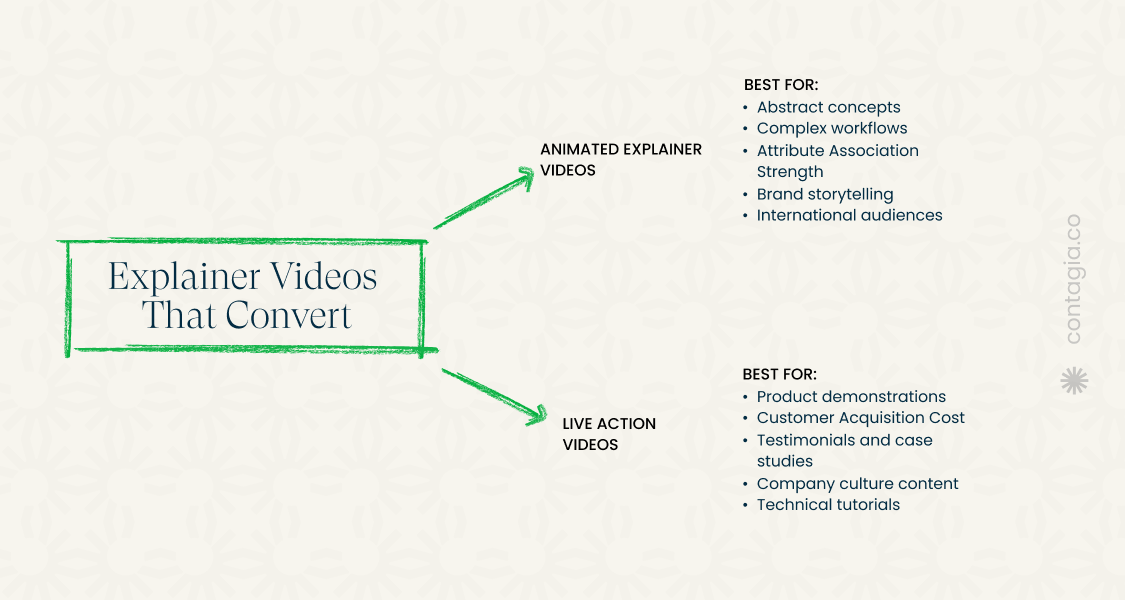
Animated explainer videos excel at simplifying complex concepts through visual metaphors and storytelling. Animation allows you to illustrate abstract software benefits that would be difficult to demonstrate through live-action footage. Studies show that the vast majority of consumers watch explainer videos to better understand products and services before making purchasing decisions.
When to use animation vs. live-action depends on your product complexity and target audience preferences. Animation works better for:
- Abstract concepts that are difficult to visualize
- Complex workflows that benefit from simplified illustration
- Brand storytelling that requires creative visual elements
- International audiences where language barriers might exist
Live-action videos perform better for:
- Product demonstrations requiring authentic software interfaces
- Testimonials and case studies where human credibility matters
- Company culture content showcasing team personalities
- Technical tutorials showing actual software usage
The key is clarity over cleverness — your viewer should instantly understand the problem, the stakes, and why your software solves it better than anything else.
Customer Success and Testimonial Videos
Creating compelling testimonial videos requires thoughtful preparation and guided interviewing. At Contagia, we recommend pairing a structured interview outline with a natural conversational style — this helps capture stories that feel genuine rather than scripted. The strongest testimonials follow a subtle narrative arc: challenge → experience → outcome.
Your role during filming isn't to “direct” the speaker — it’s to create the conditions where their authentic experience can naturally unfold.
Video credit: ClickUp Youtube Channel
Interview techniques for authentic responses include:
- Open-ended questions that encourage storytelling rather than yes/no answers
- Specific outcome inquiries that generate quantifiable results
- Challenge-focused discussions that highlight transformation narratives
- Future-looking questions about continued software usage and recommendations
Before and after storytelling creates compelling narratives that prospects can relate to their own situations. These stories should include specific metrics, timelines, and business outcomes. The most effective testimonials follow this structure:
1. Business situation before implementing your software
2. Challenges and frustrations with previous solutions
3. Implementation process and initial experiences
4. Specific results achieved with quantifiable metrics
5. Ongoing benefits and future plans
Industry-specific case studies resonate more strongly with prospects than generic success stories. Creating testimonials that address challenges unique to specific industries or company sizes increases relevance and conversion potential.
Tools and Platforms for Creating SaaS Video Funnels
Video Creation Tools for SaaS Companies
Professional video production options range from full-service agencies to freelance specialists. Agency partnerships work best for companies needing high-volume content creation or lacking internal video expertise. Costs typically range from $3,000-$15,000 per finished minute for professional production.
When to hire agencies vs. in-house production depends on several factors:
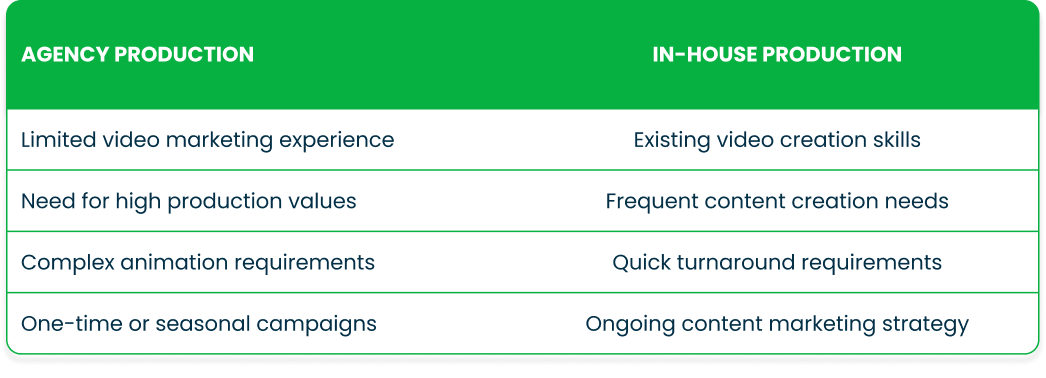
While going in-house is a good option for many of these cases, at Contagia, we take pride in coming up with cost-effective price plans for frequent work with quick turnaround times as well. Also, we have come up with very structured yet flexible-priced fee structures, exclusively for new startups who are either in their pre-seed or pre-revenue phase, so that they could also get the best bang for the buck.
Equipment recommendations for different budgets:
Starter Budget ($500-$1,500):
- Logitech C920 HD webcam for talking head videos
- Audio-Technica ATR2100x-USB microphone for clear audio
- Basic lighting kit with softbox panels
- Canva or Animoto for simple animated graphics
Professional Budget ($2,000-$5,000):
- Canon EOS M50 Mark II camera with video capabilities
- Rode VideoMic Pro Plus external microphone
- Neewer LED light panels with diffusion
- Adobe Creative Suite for advanced editing
Enterprise Budget ($5,000+):
- Sony FX3 cinema camera for cinematic quality
- Professional audio recording equipment
- Multi-light studio setup with green screen
- Professional editing workstation and software
DIY video creation platforms enable teams without technical expertise to produce professional-looking content. These tools typically offer templates, stock footage libraries, and intuitive editing interfaces.
Loom for quick screen recordings excels at creating tutorial and demonstration videos. Its streamlined workflow allows you to record, lightly edit, and share a video in a matter of minutes — making it ideal for walkthroughs, feature demos, and internal explanations. The platform is designed for speed — you can record, trim, and share a screen recording in just a few steps.
Vidyard for personalized videos integrates with popular CRM platforms, enabling sales teams to create custom videos at scale. The platform's analytics provide detailed viewer engagement data that helps optimize follow-up strategies.
Wistia for hosting and analytics offers advanced video marketing features. It is a strong option for hosting and analyzing business video content, especially when you need more control than platforms like YouTube offer. It includes built-in tools such as customizable video players, calls-to-action, lead capture forms, and detailed viewer engagement analytics.
Video Hosting and Distribution Platforms
Comparing video hosting solutions requires evaluating features, costs, and integration capabilities relevant to your marketing stack.
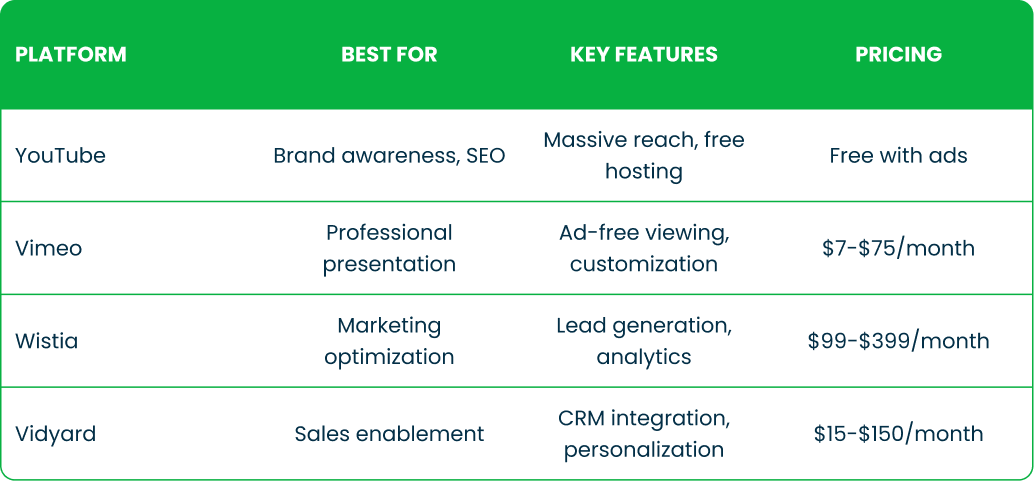
Video SEO considerations impact your content's discoverability across search engines and platforms. Optimization tactics include:
- Keyword-optimized titles that include relevant search terms
- Detailed descriptions with strategic keyword placement
- Custom thumbnails that improve click-through rates
- Closed captions that enhance accessibility and SEO value
- Schema markup that helps search engines understand video content
Marketing automation integration allows your video content to become part of a larger lead nurturing system. When viewer engagement data is connected to platforms like HubSpot, your sales and marketing teams can see who watched, how long, and what topics captured their interest. This helps tailor follow-up messaging based on actual behavior rather than assumptions.
According to the HubSpot State of Marketing Report, 54% of consumers want to see more video content from brands they support, reinforcing the importance of incorporating video into the broader customer journey.
Analytics and Measurement Tools
Video performance tracking metrics provide insights into content effectiveness and optimization opportunities. Essential metrics include:
Engagement Metrics:
- View-through rate - percentage watching beyond 15 seconds
- Average watch time - how long viewers stay engaged
- Engagement rate - likes, shares, comments relative to views
- Click-through rate - percentage clicking embedded calls-to-action
Conversion Metrics
- Lead generation rate - form submissions per video view
- Trial signup rate - conversions from video calls-to-action
- Sales qualified lead rate - qualified prospects from video engagement
- Customer acquisition cost - total video marketing spend per new customer
Vidyard's video marketing benchmarks provide industry standards for performance comparison across different video types and distribution channels.
Best Practices for SaaS Video Funnel Implementation
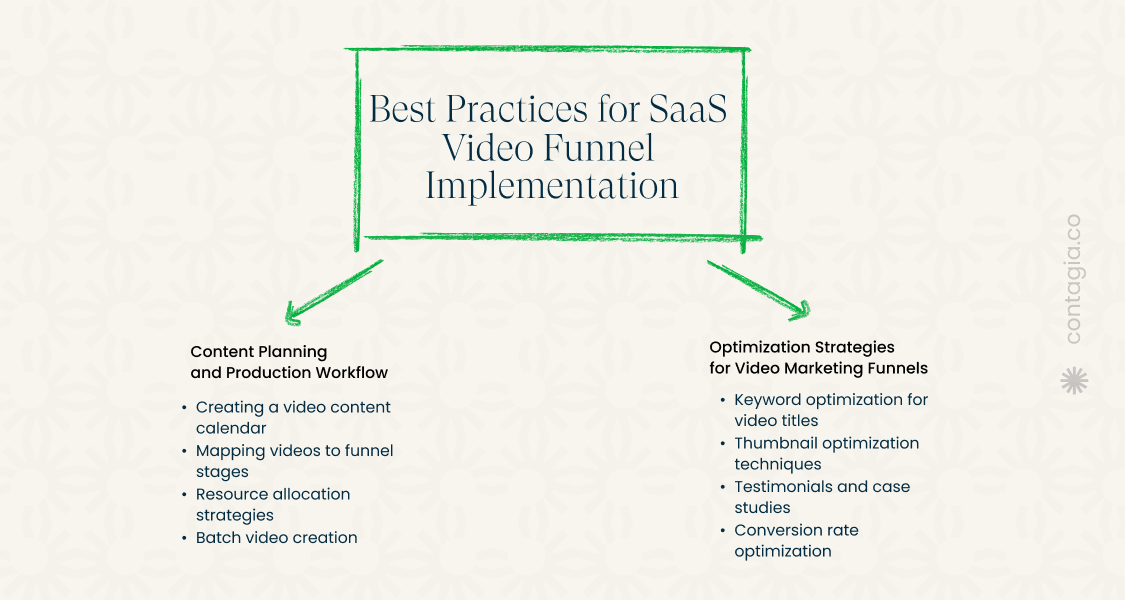
Content Planning and Production Workflow
Creating a video content calendar ensures consistent production while aligning content with marketing objectives and product releases. Successful calendars map specific video types to funnel stages and seasonal marketing campaigns.
Mapping videos to funnel stages requires understanding how different content types serve unique purposes throughout the customer journey. This strategic approach prevents content gaps while avoiding redundant messaging.
Monthly Content Planning Framework:
- Week 1: Awareness content (educational, industry-focused)
- Week 2: Interest content (product demos, case studies)
- Week 3: Consideration content (trial promotions, webinars)
- Week 4: Conversion/retention content (testimonials, advanced tutorials)
Resource allocation strategies help balance production efficiency with content quality. Many B2B marketing teams prioritize formats that deliver higher engagement and long-term value, with video commonly ranking among the most invested-in content types.
Batch video creation maximizes production efficiency by recording multiple videos during single sessions. This approach reduces setup time while maintaining consistent visual branding across content series.
Optimization Strategies for Video Marketing Funnels
Video SEO for SaaS companies requires understanding how search algorithms evaluate video content. Google's video search algorithm considers engagement signals, relevance factors, and technical optimization elements.
Keyword optimization for video titles should balance search visibility with compelling messaging. Effective titles include:
- Primary keywords positioned near the beginning
- Compelling value propositions that encourage clicks
- Character limits under 60 characters for full display
- Action words that create urgency or curiosity
Thumbnail optimization significantly impacts click-through rates. YouTube’s official guidance emphasizes creating custom thumbnails that are visually clear, emotionally expressive, and aligned with the video's core message to encourage more viewers to click.
Effective thumbnail elements include:
- High contrast colors that stand out in video feeds
- Readable text overlays highlighting key benefits
- Human faces showing genuine emotions
- Brand consistency with logo placement and color schemes
Conversion rate optimization applies structured A/B testing to evaluate how different video elements influence viewer behavior. Testing variables such as thumbnail design, call-to-action placement, video length, and messaging style helps identify which formats lead to higher engagement and conversions.
Common Mistakes to Avoid in SaaS Video Funnels
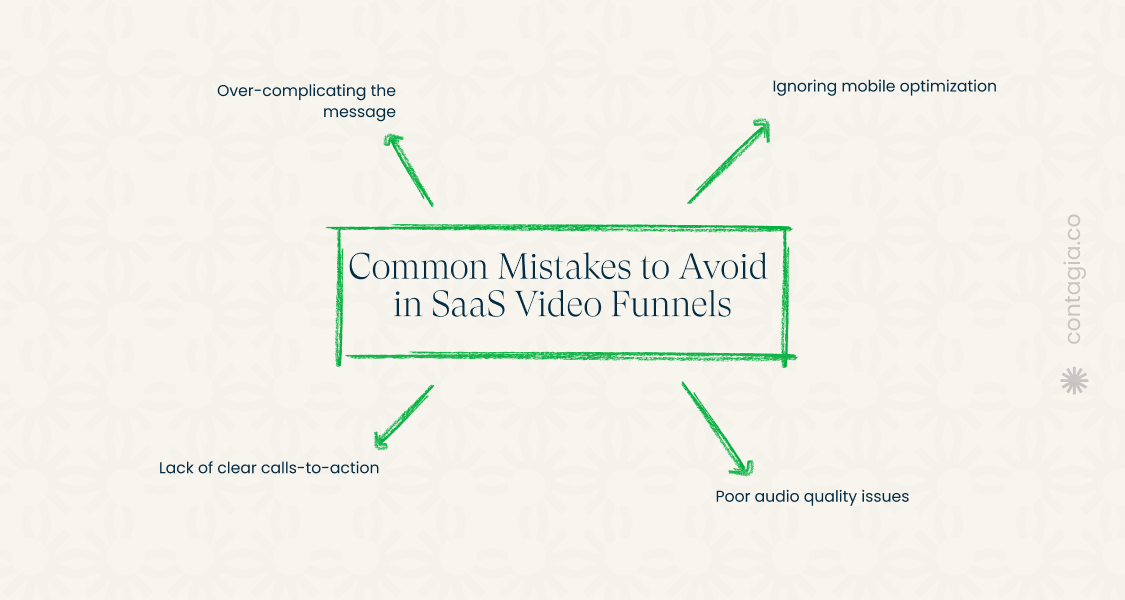
Over-complicating a message can dilute clarity and reduce viewer engagement. The most effective SaaS videos typically highlight one core concept or feature rather than attempting to cover everything at once. Research published in Behaviour & Information Technology indicates that users form visual impressions of content in as little as 50 milliseconds, reinforcing the importance of clear and immediately understandable messaging.
Ignoring mobile optimization. Mobile optimization is critical for video performance, as a significant share of video viewing happens on smartphones and tablets. Videos that are not designed for mobile screens often lose engagement due to text readability, framing issues, or pacing that doesn’t suit mobile viewing behavior.Mobile-optimized videos require:
- Vertical or square aspect ratios for social platform compatibility
- Large, readable text that remains legible on small screens
- Fast loading times optimized for cellular connections
- Touch-friendly interaction elements for calls-to-action
Poor audio quality issues destroy video credibility regardless of visual production values. Techsmith's video marketing research shows that 25% of viewers stop watching videos with poor audio quality within the first 10 seconds.
Lack of clear calls-to-action wastes video engagement by failing to guide viewers toward desired actions. Effective CTAs should:
- Appear multiple times throughout longer videos
- Use action-oriented language that creates urgency
- Provide specific instructions about next steps
- Include visual elements that draw attention
Measuring Success: KPIs and Analytics for Video Funnels
Key Metrics for Each Funnel Stage
Awareness stage metrics focus on reach, engagement, and brand recognition rather than direct conversions. These metrics help evaluate whether your content successfully attracts and engages your target audience.
Primary Awareness KPIs:
- Video impressions - total number of times videos were displayed
- Unique viewers - individual people who watched your content
- Social sharing rate - percentage of viewers sharing videos
- Brand mention increase - growth in organic brand discussions
- Website traffic from video - visits generated by video content
Video content consistently generates stronger social engagement and share activity compared to static formats like text and images. This makes social performance metrics important indicators of early-stage brand awareness and audience resonance.
Consideration stage metrics track how effectively videos move prospects through evaluation processes. These metrics indicate content quality and relevance to buyer needs.
Primary Consideration KPIs:
- Video completion rates - percentage watching entire videos
- Click-through rates - CTA engagement from video content
- Lead generation - form submissions attributed to video views
- Email subscriptions - newsletter signups from video CTAs
- Content consumption progression - viewers watching multiple related videos
Conversion and onboarding metrics measure the ultimate effectiveness of video marketing funnels. These metrics directly correlate with revenue generation and customer success.
Primary Conversion KPIs:
- Trial signup rate - free trial conversions from video traffic
- Sales qualified leads - prospects meeting qualification criteria
- Customer acquisition cost - total marketing spend per new customer
- Onboarding completion rate - percentage finishing video training sequences
- Feature adoption rate - customers using capabilities demonstrated in videos
Advanced Analytics and Attribution Advanced Analytics and Attribution
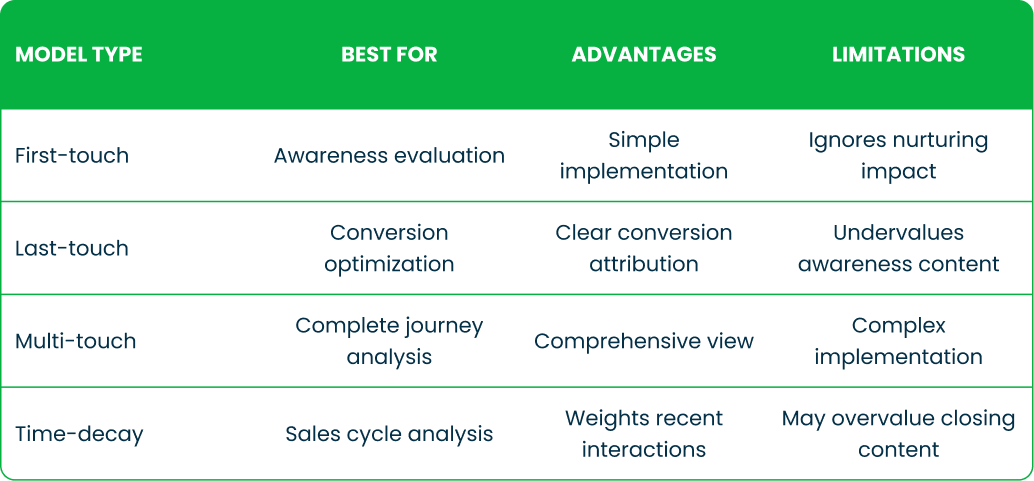
Multi-touch attribution for video content helps clarify how video contributes to the customer journey by analyzing interactions across multiple touchpoints. Instead of evaluating video performance in isolation, attribution models reveal how video supports awareness, education, and conversion at different stages of the buying process.
Customer journey mapping with video touchpoints reveals how video content influences decision-making at different stages. This analysis helps optimize content placement and messaging throughout the funnel.
ROI calculation methodologies for video marketing requires evaluating both direct revenue from conversions and indirect value such as brand lift, engagement quality, and pipeline influence. Because video contributes to multiple stages of the customer journey, using multi-touch attribution and consistent performance tracking provides a more realistic measure of return. ROI outcomes vary widely depending on distribution strategy, audience fit, and content quality.
Attribution Model Comparison:
Future Trends in SaaS Video Marketing Funnels
Emerging Technologies and Opportunities
Interactive video experiences transform passive viewing into a more participatory experience by allowing viewers to make choices, navigate different content paths, and interact with embedded elements. This format typically increases engagement because audiences feel more involved and in control of the viewing journey. Brands often use interactive structures to deepen understanding, improve retention, and guide viewers toward tailored next steps.
AI-powered video personalization adapts content based on viewer behavior, demographics, and engagement patterns. Machine learning algorithms analyze viewing data to customize video recommendations and optimize content delivery timing.
Virtual and augmented reality integration creates immersive product experiences that traditional video cannot match. While still emerging, VR and AR technologies show promise for complex SaaS demonstrations and training applications.
Short-form video platforms for B2B represent growing opportunities as professional audiences embrace platforms like TikTok and Instagram Reels for business content consumption. Many organizations are experimenting with concise, high-impact video formats to communicate expertise, highlight use cases, and build brand presence in fast-moving social environments.
Preparing Your SaaS Video Strategy for the Future
Staying ahead of platform algorithm changes requires monitoring platform updates and adapting content strategies accordingly. Algorithm modifications can significantly impact content reach and engagement rates.
Building scalable video production processes enables consistent content creation as marketing demands increase. Scalable systems include standardized workflows, template libraries, and cross-functional team collaboration protocols.Building scalable video production processes enables consistent content creation as marketing demands increase. Scalable systems include standardized workflows, template libraries, and cross-functional team collaboration protocols.
Investment planning for video marketing should account for evolving technology costs, production workflows, and changes in platform standards. Industry benchmarks consistently show that organizations achieving strong video performance treat video as a dedicated budget category rather than an add-on to general marketing spend. This includes allocating resources for scripting, production, platform adaptation, and ongoing content refresh cycles.
Getting Started: Your SaaS Video Funnel Action Plan
Step-by-Step Implementation GuideStep-by-Step Implementation Guide
Month 1: Foundation and planning establishes the groundwork for successful video funnel implementation. This phase focuses on strategic planning rather than content creation.
Foundation Activities:
- Audit current content to identify gaps and opportunities
- Define target audience personas with specific pain points and preferences
- Research competitor video strategies to identify differentiation opportunities
- Set up basic video creation tools and hosting platforms
- Establish measurement frameworks and tracking systems
Target audience research should go beyond demographics — it needs to uncover how your audience searches, evaluates solutions, and makes decisions. Organizations with clearly documented audience personas generally see stronger conversion performance because messaging, examples, and value propositions can be tailored directly to real customer motivations and pain points.
Month 2-3: Content creation and testing shifts focus to producing initial video content across different funnel stages. This phase emphasizes learning and optimization over perfection.
Production Priorities:
- Create one video per funnel stage to establish baseline performance
- Implement tracking and analytics across all video content
- Launch initial campaigns with modest promotion budgets
- Monitor engagement metrics and gather viewer feedback
- Document lessons learned for future content optimization
A/B testing frameworks should evaluate different video elements systematically. Test variables include thumbnail designs, video lengths, call-to-action placement, and distribution channels.
Month 4+: Optimization and scaling builds upon initial results to expand successful video types while discontinuing underperforming approaches.
Scaling Activities:
- Analyze performance data to identify top-performing content types
- Optimize successful videos through iterative improvements
- Scale production of high-converting video formats
- Expand distribution to additional platforms and channels
- Develop advanced video types like interactive content and personalized messaging
Budget Planning for SaaS Video Funnels
Cost breakdown by production type helps allocate resources effectively across different video marketing activities.
Monthly Budget Allocation (Percentage of Total Video Marketing Budget):
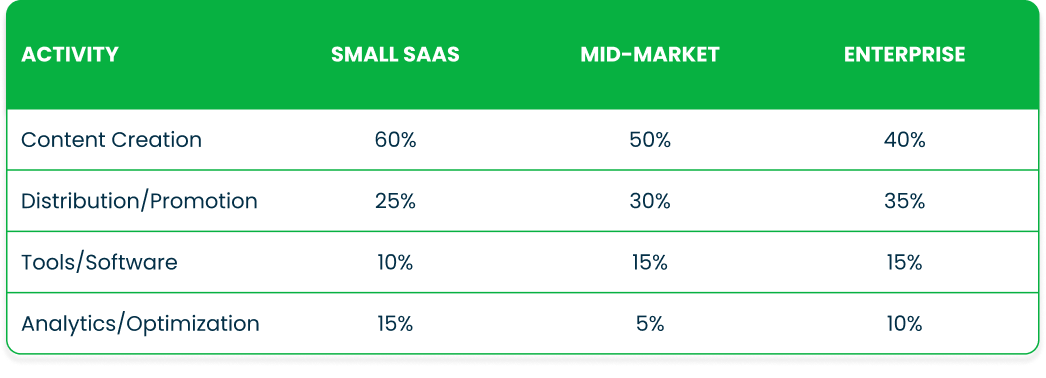
ROI expectations and timelines for video marketing depend heavily on how consistently the content is distributed, how well it aligns with audience intent, and how integrated it is within broader marketing funnels. When video is used strategically across awareness, education, and conversion touchpoints, returns tend to accumulate steadily over time rather than from a single campaign push.
Resource allocation recommendations balance content quality with production efficiency. Most successful SaaS companies start with simple video formats before investing in sophisticated production capabilities
Video funnels for SaaS represent more than a marketing tactic – they're essential infrastructure for sustainable growth in competitive markets. Companies implementing comprehensive video marketing strategies achieve 49% faster revenue growth while reducing customer acquisition costs through more efficient conversion processes.
Conclusion
The framework outlined above isn’t just a roadmap, it’s a recalibration of how modern SaaS brands communicate value. Starting with one impactful video at each funnel stage can lay the groundwork for consistent, scalable growth. But while strategy matters, execution is everything.
That’s where Contagia comes in. We’ve partnered with SaaS innovators to craft strategic video funnels, from awareness-building explainers to post-conversion onboarding sequences, that don’t just inform but influence. Each frame, each script, each sequence is purpose-built to reflect your product’s core narrative, strategically and psychologically.
The future of SaaS marketing is already in motion. It's visual, behavioral, and brand-aligned. Are your videos saying enough?