Copywriting Blueprint for Brand Messaging
[Includes Case Studies]
by Ipshita Agarwal
28 Min Read
Published On : 5th November, 2025
- Introduction
- Subtopic-1
- Subtopic-2
- Subtopic-3
- Subtopic-3
- Conclusion
Let’s be real, there’s way too much noise out there these days. Everyone’s saying something. Ads here, pop-ups there, random email offers at 2 a.m. (who even reads those?). And in all this chaos, guess what actually cuts through? Yep, words. The right ones.Let’s be real, there’s way too much noise out there these days. Everyone’s saying something. Ads here, pop-ups there, random email offers at 2 a.m. (who even reads those?). And in all this chaos, guess what actually cuts through? Yep, words. The right ones.
See, brands that stick? The ones folks remember, trust, maybe even recommend? They’ve nailed one thing most others overlook: solid, clear messaging. Not just a catchy tagline or some cheeky wordplay, nah, we’re talking about a proper copywriting game plan. A blueprint. Something that tells your story the same way, everywhere, from your homepage to your help desk replies
Also, here’s a wild stat for ya: Lucidpress dropped a study in 2019 saying brands that stay consistent with their messaging actually pull in 33% more revenue. Crazy, right? But here’s the kicker, only like 1 in 4 businesses even have a copywriting blueprint in place. (Yeah... we gasped too.)Also, here’s a wild stat for ya: Lucidpress dropped a study in 2019 saying brands that
So, what gives? Well, for starters, building a brand voice that actually feels like something takes more than slapping “authentic” into every sentence. It’s gotta sound like you. It’s gotta land right with your people. And it’s gotta show up the same way, everywhere.
That’s where this guide comes in. We’ll walk through the whole shebang, crafting that killer messaging foundation, whether you’re reviving a dusty ol’ brand or starting fresh from scratch. You’ll get the goods, stuff like how to make your voice feel human (even when you’re selling enterprise software), how to make it convert, and yep, how to make folks remember you.
Let’s dive in. (Don’t worry, we’ll keep the jargon locked away. Probably.)
Key Takeaways
- A Copywriting Blueprint is more than just a style guide—it’s a strategic framework that aligns every word your brand says with its core identity, audience needs, and business goals.
- Consistency in brand messaging increases revenue by up to 33%, yet most businesses don’t have a formal messaging system in place.
- The foundation of strong messaging starts with defining your brand purpose, mission, value proposition, voice, and messaging pillars.
- Deep audience analysis and persona building ensure messaging hits the right tone, solves the right problems, and appears at the right moments across the customer journey.
- A solid blueprint includes elements like core brand statements, messaging hierarchy, tone of voice rules, brand vocabulary, and a clear storytelling structure.
- High-performing content depends on mastering both headlines and body copy, using frameworks like AIDA, emotionally resonant stories, and persuasive CTAs.
- The blueprint must adapt across platforms—web, social, email, and print—while maintaining voice consistency and formatting for user behaviors on each.
- Successful brand examples (Mailchimp, Dollar Shave Club, Airbnb) show how disciplined messaging frameworks build memorable, scalable brand identities.
- Implementation requires training, review processes, and easy-access documentation, while regular updates keep the blueprint aligned with evolving brand needs.
- Future-proof your blueprint by incorporating AI usage guidelines, personalization boundaries, voice search strategies, and conversational content principles.
What Is a Brand Messaging Copywriting Blueprint?
A brand messaging copywriting blueprint is much more than a style guide or brand voice document. Think of it as the architectural plans for your brand's entire communication strategy, a structured framework that defines not just how you say things, but what you say, when you say it, and to whom.A brand messaging copywriting blueprint is much more than a style guide or brand voice document. Think of it as the architectural plans for your brand's entire communication strategy, a structured framework that defines not just how you say things, but what you say, when you say it, and to whom.
This blueprint serves as the foundation for every piece of written content your brand produces, ensuring consistent messaging that reinforces your core identity while speaking directly to your audience's needs and desires.
The elements that make up a comprehensive brand messaging copywriting blueprint typically include:
- Brand positioning statements
- Core messaging pillars
- Audience personas and language preferences
- Tone of voice guidelines
- Brand vocabulary and terminology
- Messaging hierarchy
- Value proposition articulation
- Brand story framework
- Communication standards by channel
"A brand is not what you say it is. It's what they say it is."
-Marty Neumeier
According to brand strategist Marty Neumeier, "A brand is not what you say it is. It's what they say it is." Your copywriting blueprint bridges this gap, ensuring what you intend to communicate aligns with how your audience perceives your message. This alignment is critical, research from Salesforce indicates that 84% of customers say being treated like a person, not a number, is very important to winning their business. A well-crafted copywriting blueprint helps humanize your brand through consistent, authentic communication.
The Foundation: Understanding Your Brand's Core Identity
Many startups and growth-stage companies struggle to define this foundation internally. Collaborating with a strategic branding partner (meaning, Us *wink*) can uncover unique insights that might otherwise go unnoticed—especially when that partner brings both creative and analytical lenses to the table.
Defining your brand purpose and mission forms the cornerstone of this foundation. Your purpose answers the critical "why" question, why does your brand exist beyond making money? When companies define and live their purpose, it pays off: research from the EY Beacon Institute suggests purpose-driven firms significantly outperform their peers in market value and growth.
So- yes — that mission statement and brand purpose aren’t just feel-good. They’re a business asset.
To define your brand purpose, answer these essential questions:
- Why did we start this company?
- What problem are we solving in the world?
- What would be lost if we disappeared tomorrow?
- What drives us beyond profit?
Your mission statement flows naturally from your purpose but focuses more on what you do and how you do it. For your copywriting blueprint, your mission provides guardrails for messaging, ensuring everything you communicate ties back to your core objectives.
Centered on the mission “We’re in business to save our home planet,” Patagonia proves that a strong purpose can shape every aspect of a brand’s identity.

Image Credit: patagonia.com
Take Patagonia's mission statement as an example: "We're in business to save our home planet." This single sentence informs every piece of their brand communication, from product descriptions to environmental campaigns. It's simple yet powerful, exactly what your brand messaging mission should aspire to be.
Next, identifying your unique value proposition crystallizes what makes your brand different and better than alternatives. This isn't simply about features or benefits, but rather the distinctive value you deliver to customers that they can't get elsewhere in quite the same way.
Your UVP should address:
1. Who your specific customer is
2. What specific problem you solve
3. How you solve it uniquely
4. Why your approach is superior
For your copywriting blueprint behind strong brand messaging, your UVP becomes the nucleus around which all messaging orbits. Every significant piece of communication should reflect some aspect of this proposition, whether explicitly or implicitly.
Articulating your brand voice and personality traits gives your messaging human qualities that forge emotional connections. Is your brand authoritative or friendly? Irreverent or serious? Technical or accessible? These characteristics should align with both your purpose and your audience's expectations.
A helpful exercise is to create a brand personality spectrum with opposing traits:
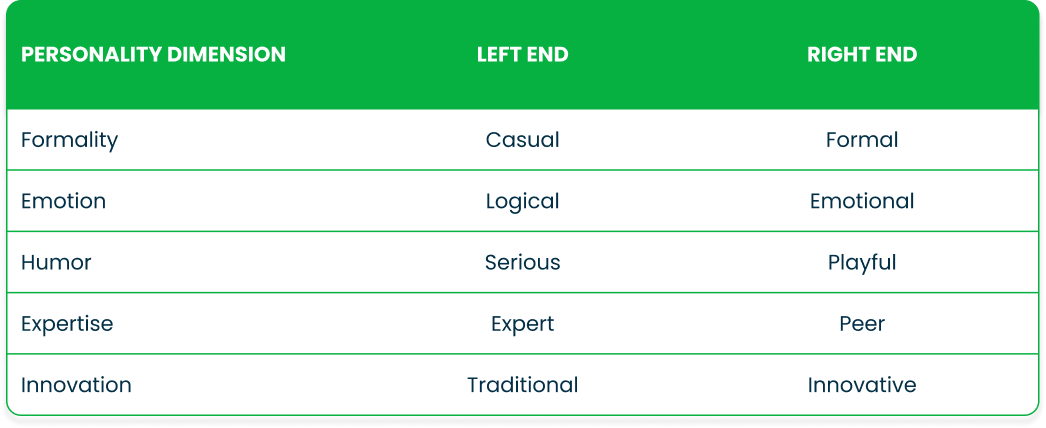
Place your brand somewhere on each spectrum, then use these positions to inform your copywriting blueprint. This ensures writers maintain a consistent personality across all brand messaging.
Lastly, creating brand messaging pillars provides structural support for your entire communication strategy. These pillars, typically 3-5 key themes, represent the central ideas your brand stands for and speaks about consistently.
For example, athletic apparel brand Lululemon builds their messaging around pillars that include:For example, athletic apparel brand Lululemon builds their messaging around pillars that include:
- Personal growth through physical activity
- Mindfulness and well-being
- Community connection
- Product innovation and quality
Every piece of content they produce ties back to one or more of these pillars, creating cohesive brand messaging that feels consistent yet never repetitive.
By establishing these foundational elements, you create the essential infrastructure for your copywriting blueprint. Just as importantly, you save countless hours of revisions and prevent the brand confusion that results from messaging that lacks clear direction.
Audience Analysis: The Critical First Step in Your Copywriting Blueprint
Even the most beautifully crafted messaging falls flat if it doesn't resonate with your specific audience. That's why thorough audience analysis forms the bedrock of an effective copywriting blueprint for strong brand messaging. As marketing pioneer John Wanamaker is famously credited with saying, “Half the money I spend on advertising is wasted; the trouble is, I don’t know which half.” Proper audience analysis helps eliminate this wastage by ensuring your messaging targets the right people in the right way.
“Half the money I spend on advertising is wasted;
the trouble is, I don’t know which half.”
-John Wanamaker
Developing audience personas transforms abstract demographics into realistic representations of your ideal customers. These personas go beyond basic information to capture motivations, pain points, desires, and communication preferences.
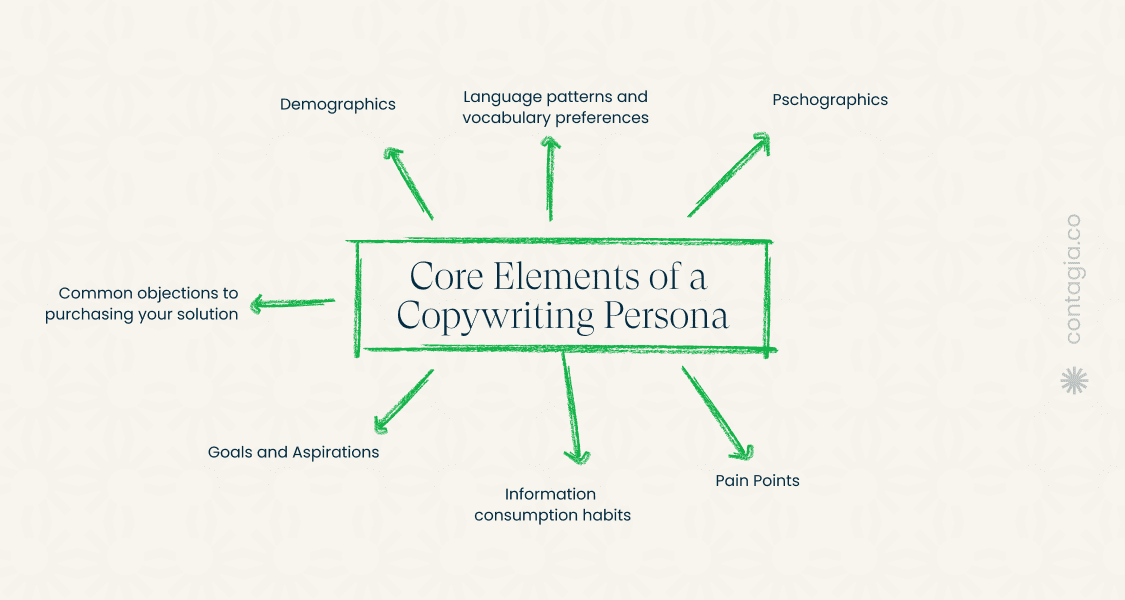
For your copywriting blueprint, each persona should include:
- Demographics (age, location, income, education)
- Psychographics (values, interests, lifestyle choices)
- Goals and aspirations related to your product/service
- Pain points and challenges your offerings address
- Information consumption habits (preferred content types and channels)
- Common objections to purchasing your solution
- Language patterns and vocabulary preferences
Research from the Edelman Trust Barometer shows that 81% of consumers need to trust a brand before buying. Your personas help identify what builds trust with different audience segments, allowing your copywriting blueprint to address these specific trust factors.
To create truly useful personas, blend multiple research approaches:
1. Quantitative research via surveys and analytics data provides statistical insights into your audience's behavior patterns.
2. Qualitative research through interviews and focus groups uncovers deeper motivations and emotional drivers.
3. Social listening reveals how your audience naturally communicates about topics relevant to your brand.
4. Competitor analysis identifies audience needs that competitors might be addressing more effectively.
5. Sales team insights from direct customer interactions often reveal valuable information about customer decision-making processes.
The Essential Elements of a Strong Brand Messaging Copywriting Blueprint
Now that we've established your brand foundation and audience understanding, it's time to construct the actual framework of your copywriting blueprint. This framework consists of five critical components that together create a comprehensive system for strong brand messaging.
Crafting your core brand statement sits at the heart of your messaging architecture. This concise statement, usually 1-2 sentences, articulates what your brand does, who you serve, and how you deliver unique value. Unlike internal-facing mission statements, your core brand statement directly informs customer-facing communications.
When developing your core statement for your copywriting blueprint, ensure it meets these criteria:
- Clearly communicates your primary customer benefit
- Differentiates from competitors' positioning
- Can be substantiated with evidence
- Resonates emotionally with your target audience
- Remains relevant across product/service lines
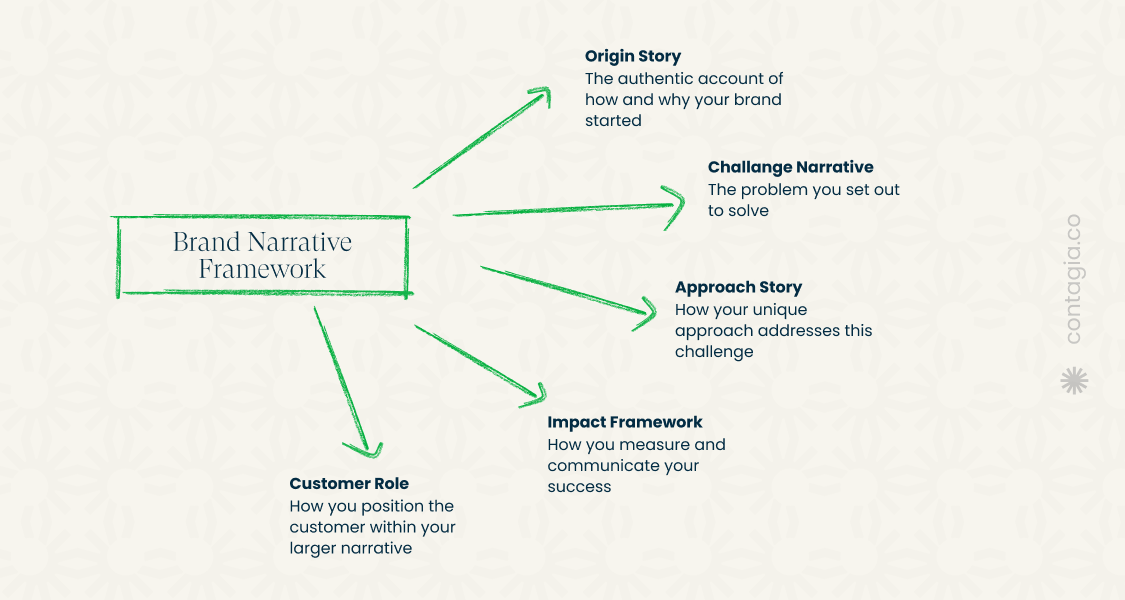
Developing your brand story framework gives your messaging narrative coherence. This isn't about creating a literal "once upon a time" story, but rather establishing a consistent approach to how your brand talks about its origins, purpose, and relationship with customers.
Brands that craft and share a coherent narrative tend to retain more customers over time. Research published by the Harvard Business Review and allied business journals backs this link between storytelling clarity and long-term loyalty. Your story framework should include:
1. Origin story: The authentic account of how and why your brand started
2. Challenge narrative: The problem you set out to solve
3. Approach story: How your unique approach addresses this challenge
4. Impact framework: How you measure and communicate your success
5. Customer role: How you position the customer within your larger narrative
Effective tone guidelines include:
- Clear descriptions of your brand voice characteristics
- "Do this, not that" examples showing tone in practice
- Context-specific adaptations (e.g., social media vs. legal notices)
- Guidance on handling sensitive topics or customer service issues
Software company Mailchimp offers an excellent example with their comprehensive content style guide, which provides clear tone guidance like: "We're conversational but not chatty, confident but not cocky, and expert but not bossy.
Building a comprehensive brand vocabulary completes your messaging framework by establishing preferred terminology, forbidden words, and language conventions. This vocabulary ensures consistency across all brand communications and prevents messaging confusion.
Your brand vocabulary should include:
- Industry terms you use (and how you define them)
- Proprietary terms specific to your products/services
- Common terms you avoid (and preferred alternatives)
- How you refer to your company, products, and audience
- Capitalization and formatting conventions
For instance, Apple's copywriting blueprint clearly specifies product name conventions (iPhone, not "the iPhone") and avoids technical jargon in favor of benefit-focused language. These seemingly small consistency details significantly strengthen brand perception.
By developing these five elements for your copywriting blueprint behind strong brand messaging, you create a comprehensive system that guides all written communications. This system ensures your brand speaks with one voice while delivering messages that resonate with your target audience.
Crafting Compelling Headlines: The Gateway to Your Brand Messaging
The headline is your brand's first impression, and in an era of shrinking attention spans, it's often your only chance to capture attention. Effective headlines within your copywriting blueprint serve multiple purposes: The headline is your brand's first impression, and in an era of shrinking attention spans, it's often your only chance to capture attention. Effective headlines within your copywriting blueprint serve multiple purposes:
- They grab attention in crowded media landscapes
- They qualify your ideal audience while filtering out others
- They set expectations for the content that follows
- They establish your brand voice and personality
- They deliver your most important message even to skimmers
Formula for creating attention-grabbing headlines provides your content creators with repeatable frameworks that consistently perform well. Rather than starting from scratch with each piece of content, these formulas become part of your copywriting blueprint, ensuring headline quality across all brand communications.
Some proven headline formulas to include in your copywriting blueprint:
1. The "How-To" Formula: "How to [Achieve Desired Outcome] Without [Common Pain Point]" Example: "How to Build Brand Loyalty Without Slashing Your Prices"
2. The "Question" Formula: "[Provocative Question That Targets Pain Point]?" Example: "Is Your Brand Messaging Costing You Customers?"
3. The "Number List" Formula: "[Number] Ways to [Achieve Desired Outcome]" Example: "7 Ways to Transform Your Brand Messaging Overnight"
4. The "Secret" Formula: "The Secret to [Desired Outcome] That [Competitor or Industry] Doesn't Want You to Know" Example: "The Secret to Memorable Brand Messaging That Your Competitors Don't Want You to Know"
5. The "What If" Formula: "What If You Could [Achieve Desired Outcome] by [Simple Method]?" Example: "What If You Could Double Your Conversion Rate by Changing Just 5 Words?"
Examples of strong brand messaging headlines across industries provide concrete models for your team to emulate. Studying successful competitors offers valuable insights into what resonates with your shared audience.
Consider these examples from different industries:
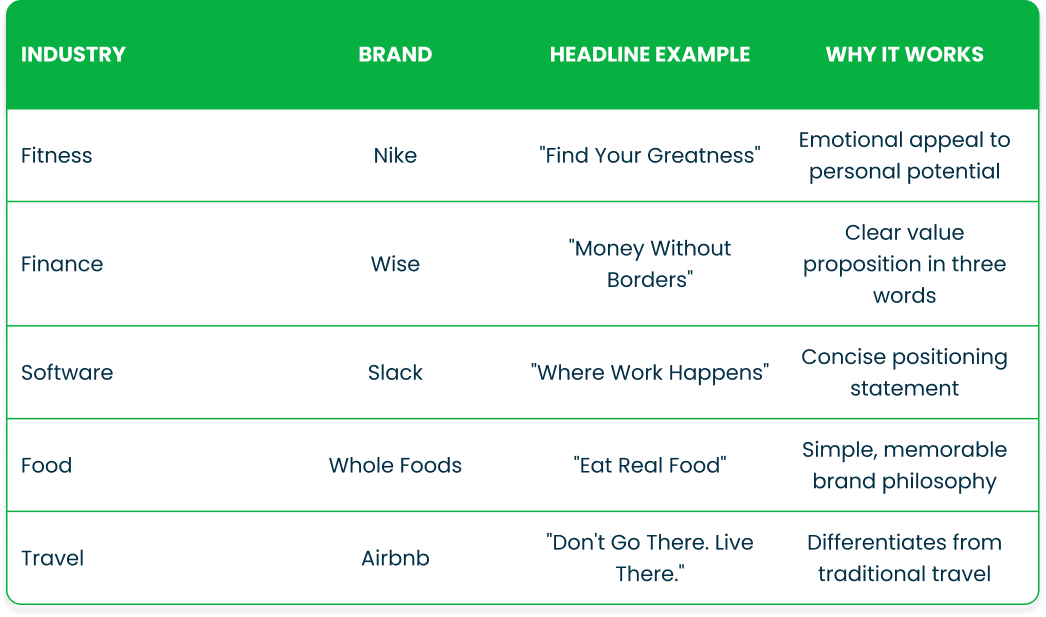
A/B testing strategies should be explicitly included in your copywriting blueprint behind strong brand messaging. Testing different headline approaches, while maintaining brand voice consistency, reveals what truly resonates with your audience rather than relying on assumptions.
Regular headline testing allows brands to fine-tune their messaging, leading to more engaging and effective content.Your blueprint should establish testing protocols including:
- Which variables to test (word choice, length, tone, structure)
- Minimum sample sizes before drawing conclusions
- How to measure success (clicks, conversions, shares)
- How to incorporate findings into future headline creation
Common headline mistakes should be documented in your copywriting blueprint to prevent messaging missteps that damage brand perception. These include:
- Clickbait that creates expectation gaps between headlines and content
- Generic claims indistinguishable from competitors
- Keyword stuffing that sacrifices readability for SEO
- Lengthy, complex headlines that confuse rather than clarify
- Disconnect between headline tone and overall brand voice
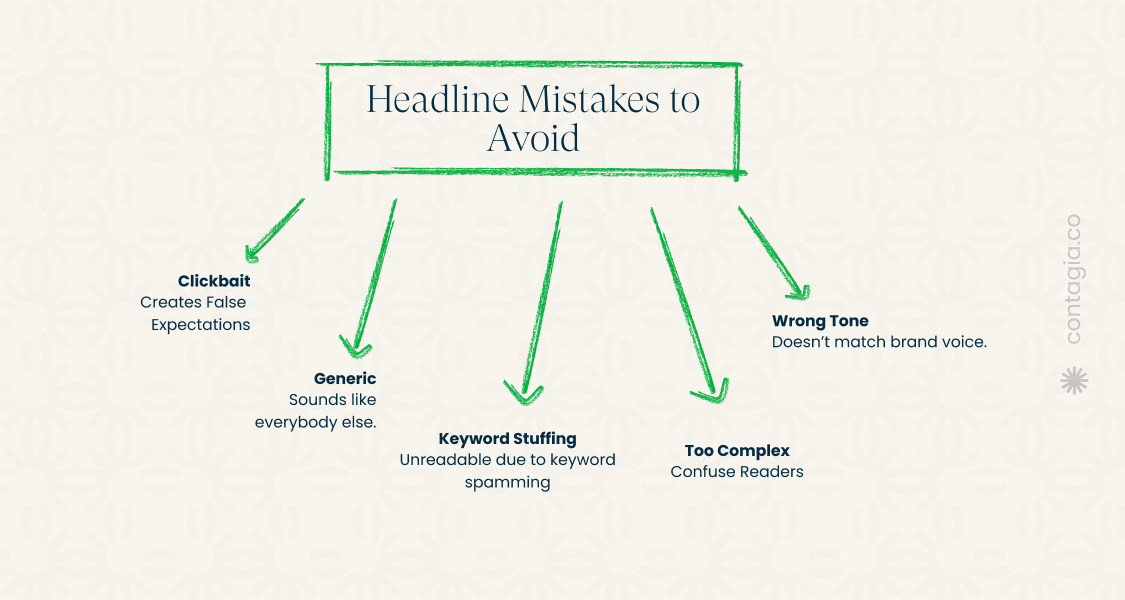
Although ideal headline length can differ based on platform and audience, shorter, punchier headlines tend to capture attention more effectively. A good starting point is to aim for six to eight words, then refine your approach through ongoing A/B testing to discover what resonates best with your readers.
By establishing comprehensive headline standards within your copywriting blueprint, you create the critical gateway to your broader brand messaging. Get this element right, and you dramatically increase the likelihood that your audience will engage with the rest of your carefully crafted content.
The Art of Persuasive Body Copy in Your Copywriting Blueprint
While headlines grab attention, your body copy does the heavy lifting of persuasion, informing, engaging, and ultimately converting your audience. A well-structured copywriting blueprint provides clear guidance for creating body copy that maintains brand voice consistency while adapting to different content types and audience needs.
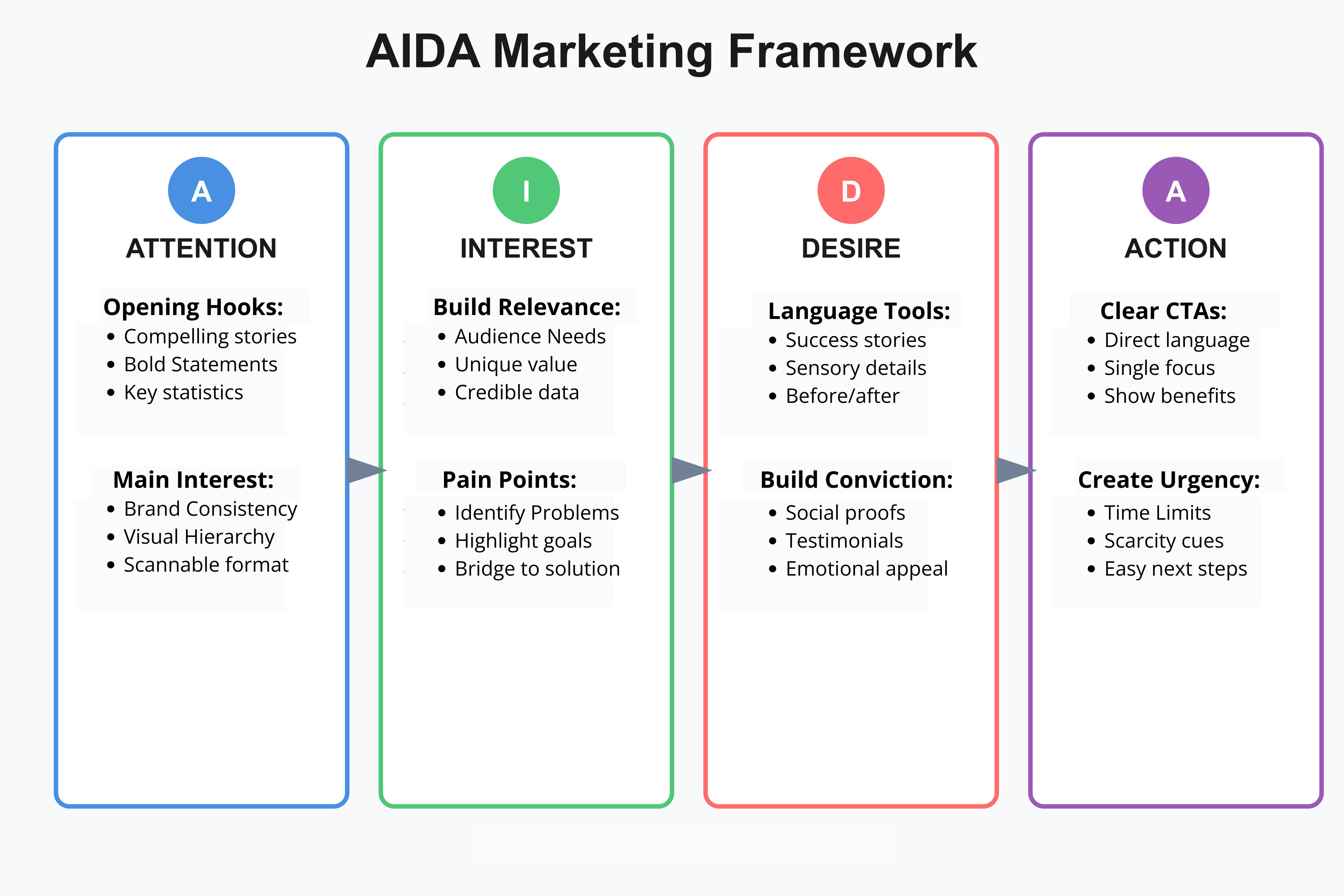
Implementing the AIDA model (Attention, Interest, Desire, Action) gives your copywriting a proven structural framework that guides readers through the decision journey. This classic model remains effective because it aligns with human psychology, moving from initial awareness to final conversion in a natural progression.
Your copywriting blueprint should detail how to execute each AIDA stage:
1. Attention: Beyond headlines, how should your opening paragraphs hook readers? What brand-specific techniques maintain the interest sparked by your headline?
2. Interest: How do you transition from general interest to specific relevance? Which pain points or aspirations should you emphasize for your audience?
3. Desire: What language, evidence, and emotional triggers convert intellectual interest into genuine desire for your offering?
4. Action: How explicitly should you state your call to action? What urgency measures align with your brand voice?
Frameworks like AIDA are powerful, but applying them through the lens of your brand tone takes practice. That’s why at Contagia, our approach blends conversion copy principles with deep brand personality alignment, so persuasion never sounds pushy, just purposeful.
Storytelling techniques transform factual information into compelling narratives that forge emotional connections. Your copywriting blueprint should identify brand-appropriate storytelling approaches and contexts where narrative elements enhance your messaging.
Effective storytelling elements to include in your blueprint:
- Character development: How to position your customer as the hero of the story
- Conflict framing: How to articulate problems your customer faces
- Resolution arcs: How your product/service helps resolve these conflicts
- Pacing guidance: When to use detailed stories vs. brief anecdotes
Research by neuroscientist Paul Zak indicates that character-driven stories can stimulate oxytocin production in the brain, enhancing empathy and motivating cooperative behaviors. By leveraging this biological response through strategic storytelling, your brand can foster deeper emotional connections with your audience.

Memorable characters help Liberty Mutual communicate their services more effectively.
Image Credit: Liberty Mutual Insurance Fb Page
Consider how insurance company Liberty Mutual uses their "LiMu Emu and Doug" characters to make insurance memorable through storytelling. The campaign increased brand recall by 35% by wrapping otherwise dry information in entertaining narrative.
Using proof points and evidence establishes credibility within your persuasive copy. Your copywriting blueprint should specify which types of evidence best support your brand claims and how to present them authentically.
Types of evidence to incorporate in your blueprint:
- Statistical data and research findings
- Customer testimonials and case studies
- Expert endorsements and industry recognition
- Comparative analyses and performance metrics
- Social proof indicators (user counts, reviews, etc.)
Maintaining consistent brand voice throughout longer content presents unique challenges. Your copywriting blueprint should provide guidance for sustaining voice consistency even in technical or complex material.
Techniques to include in your blueprint:
- Voice calibration exercises: Examples of how to translate complex concepts into your brand voice
- Readability standards: Appropriate reading level targets for different content types
- Sentence length variation: Guidelines for mixing sentence lengths to maintain engagement
- Paragraph structure: Maximum paragraph length and structure recommendations
- Transition phrase library: Brand-appropriate transitions between sections
According to UX research by the Nielsen Norman Group, online readers typically scan content in an F-pattern rather than reading every word. Your copywriting blueprint should account for this behavior by incorporating scannable elements like subheadings, bullet points, and emphasized text without compromising brand voice.
Call-to-Action Strategies in Your Brand Messaging Framework
Even the most persuasive copy falls short if it doesn't clearly direct readers toward taking action. Your copywriting blueprint must include comprehensive guidance on crafting calls-to-action (CTAs) that align with both your conversion goals and overall brand messaging.Even the most persuasive copy falls short if it doesn't clearly direct readers toward taking action. Your copywriting blueprint must include comprehensive guidance on crafting calls-to-action (CTAs) that align with both your conversion goals and overall brand messaging.
Psychology behind effective CTAs reveals why certain approaches consistently outperform others. By understanding these psychological principles, your copywriting blueprint can systematically incorporate them into your brand messaging.
Key psychological principles to include:
1. Loss aversion: People are more motivated to avoid losses than to acquire equivalent gains. CTAs that frame inaction as a missed opportunity ("Don't miss out on...") leverage this tendency.
2. Ownership bias: Once people imagine owning something, they value it more highly. CTAs that encourage mental ownership ("Start your journey" rather than "Sign up") tap into this bias.
3. Choice paradox: Too many options create decision paralysis. Your copywriting blueprint should specify limiting CTA options to prevent overwhelming users.
4. Instant gratification: Immediate rewards are psychologically more motivating than delayed benefits. CTAs should emphasize immediate gains where possible.
5. Social proof: People follow others' actions in uncertain situations. Incorporating social elements into CTAs ("Join 50,000+ subscribers") reduces perceived risk.
Through our work at Contagia, we’ve seen how subtle changes in phrasing, especially in CTAs, can influence behavior dramatically. It’s not about being louder, but about being clearer and more emotionally attuned.
Examples of brand-aligned CTAs provide templates that maintain messaging consistency while driving specific actions. Your blueprint should include examples customized to different contexts and customer journey stages.
Consider how these brands align CTAs with their overall messaging:
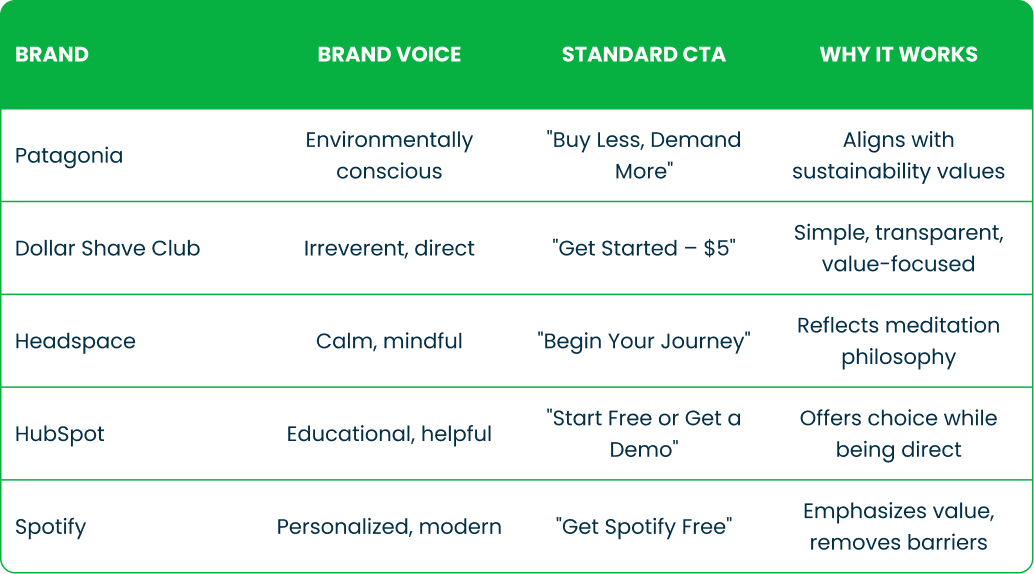
How to test and optimize CTAs should be an explicit component of your copywriting blueprint. Establishing testing protocols ensures continuous improvement while maintaining brand voice consistency.
Your blueprint should include guidelines for:
- A/B testing different CTA phrases while controlling other variables
- Testing CTA placement within content
- Evaluating color, size, and design elements (in coordination with visual guidelines)
- Measuring not just click rates but conversion follow-through
- Documenting test results to inform future CTA creation
Studies on conversion optimization have shown that using first-person language in CTAs—such as “Start my free trial” instead of “Start your free trial”—can lead to significantly higher click-through rates. Findings like these should inform your copywriting blueprint’s CTA guidance.
Adapting Your Copywriting Blueprint Across Different Channels
Your copywriting blueprint behind strong brand messaging must account for the unique requirements and audience expectations of different communication channels. While core messaging remains consistent, execution requires thoughtful adaptation to maximize effectiveness across platforms.
Tailoring your brand messaging for website copy requires understanding how users interact with digital environments. Your copywriting blueprint should provide specific guidance for website content that maintains brand voice while optimizing for online reading patterns.
Website-specific considerations for your blueprint:
- Page hierarchy: How primary, secondary, and tertiary messages map to different website sections
- Scannability guidelines: Heading structures, paragraph length, and emphasis techniques
- Microcopy standards: Form field instructions, error messages, and navigation labels
- SEO integration: How to incorporate keywords without compromising brand voice
- Progressive disclosure: Techniques for revealing information complexity gradually
Research by Nielsen Norman Group found that users typically spend just 10-20 seconds on a webpage before deciding whether to stay or leave. Your copywriting blueprint should reflect this reality with front-loaded value propositions and scannable content structures.
Adjusting your copywriting blueprint for social media platforms acknowledges the significant differences between platforms while maintaining brand voice consistency. Each platform has distinct audience expectations, content formats, and engagement patterns.
Your blueprint should include platform-specific guidance like:
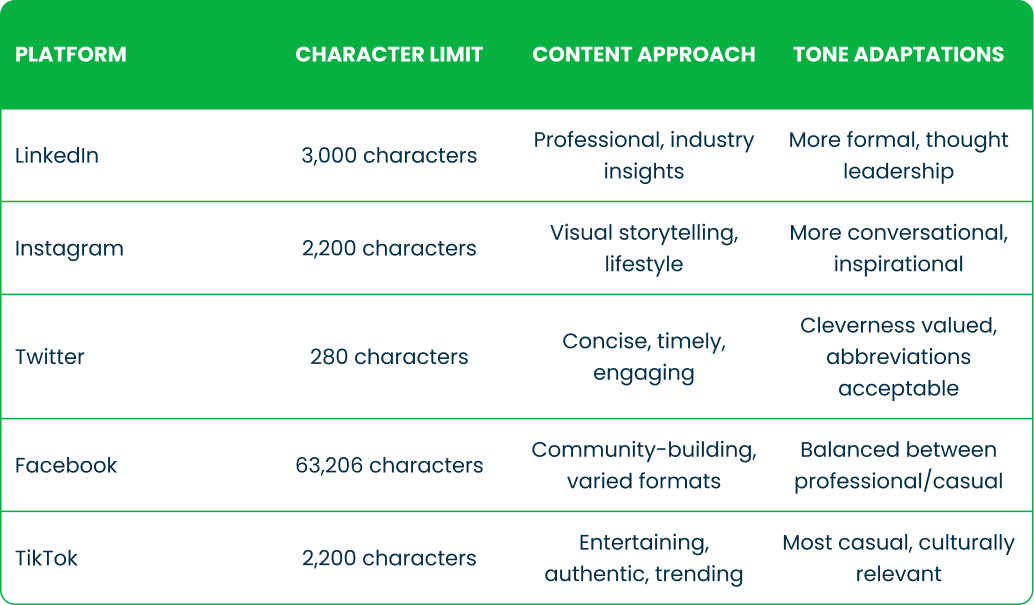
Tailoring your brand messaging to align with the unique context of each platform can lead to higher engagement compared to using a one-size-fits-all approach. Your copywriting blueprint should provide examples of the same core message adapted for different platforms.
Email marketing adaptations balance the intimate, direct nature of email with respect for the recipient's inbox. Your copywriting blueprint should include specific guidance for this high-value channel.
Email-specific elements to include:
- Subject line formulas that maintain brand voice while driving open rates
- Preheader text standards that complement subject lines
- Appropriate levels of personalization within brand voice parameters
- Email-specific CTAs and their placement guidelines
- Signature and sender name conventions
Print and traditional media considerations remain important for brands utilizing these channels. Your copywriting blueprint should address how brand messaging adapts to environments where space is limited and reader engagement differs from digital channels.
Traditional media elements to address:
- Word count guidelines for different print formats
- Headline adaptation for print contexts
- How to maintain brand voice in extremely limited spaces (business cards, product packaging)
- Adaptation of messaging hierarchy for linear reading experiences
- Integration of visual and text elements in print contexts
Even digital-first brands like Glossier and Casper have found success by adapting their online messaging for traditional contexts like subway advertisements and direct mail. Your copywriting blueprint should prepare for these cross-channel opportunities.
Visual Elements that Support Your Copywriting Blueprint
While primarily focused on written communication, a comprehensive copywriting blueprint behind strong brand messaging must address how visual elements interact with and enhance your written content. This visual-verbal alignment creates powerful brand synergy that strengthens overall messaging impact.
Creating alignment between copy and visual brand identity ensures that words and images work together rather than competing for attention. Your copywriting blueprint should establish principles for this critical relationship.
Key guidelines to include:
- How copy length and complexity should vary based on accompanying visuals
- Language patterns that complement different visual styles
- Balance between explicit statements and visual implication
- When to prioritize copy vs. when to prioritize visuals
- Techniques for ensuring accessibility when meaning relies on both text and visuals
Typography choices significantly impact how your messaging is received. Beyond the visual brand guidelines, your copywriting blueprint should address how typographic decisions affect message reception.
Typography considerations for your blueprint:
- When to use typography for emphasis vs. verbal emphasis techniques
- How different typography choices affect brand voice perception
- Character count guidelines based on typographic treatments
- Readability considerations for different fonts and sizes
- Special typographic treatments for brand-specific terminology
Pairing visual consistency with aligned messaging is where design and copy truly merge. At Contagia, this kind of synergy is central to every brand system we help build—from tone guides to branded content libraries.
Color psychology influences how readers perceive and process your written messaging. While color selection typically belongs in visual guidelines, your copywriting blueprint should address how color choices affect appropriate messaging tone.
For example:
- Red backgrounds may require more concise, urgent messaging
- Blue environments can support longer, more detailed explanations
- Yellow contexts might benefit from more optimistic language patterns
- Green settings often complement sustainability and wellness messaging
Research suggests that audiences find content more trustworthy and compelling when the tone of the message matches the emotional cues of its color background. Your copywriting blueprint should provide guidance on adapting messaging tone to complement key brand colors.
Image selection guidelines ensure that photos, illustrations, and other visuals strengthen rather than contradict your brand messaging. Your copywriting blueprint should establish principles for this critical relationship.
Include guidance on:
- Subject matter that reinforces key brand messages
- Visual diversity and representation standards
- Image styles that complement different types of messaging
- Balance between aspirational and authentic imagery
- How to maintain brand voice in image captions and alt text
Eye-tracking research by Nielsen Norman Group found that people spent more time looking at relevant images—such as portrait photos — than reading surrounding text. This highlights how relevant visuals can draw immediate attention, making them a strategic tool when paired effectively with copy.
Common Brand Messaging Mistakes and How to Avoid Them
Even the most carefully constructed copywriting blueprint can fail if it doesn't explicitly address common pitfalls. By identifying potential messaging mistakes within your blueprint, you provide valuable guardrails that keep brand communication on track.
According to Lucidpress research with Demand Metric, organisations that always present their brand consistently estimate an average 23% increase in revenue compared to those that don’t. In other words: inconsistent brand presentation can cost your business—so your copywriting blueprint must emphasise consistent messaging, visual assets and tone.
Prevention strategies to include:
- Regular content audits across all channels
- Centralized approval processes for new messaging directions
- Templates and examples for each communication channel
- Explicit guidance on acceptable variations vs. problematic inconsistencies
- Training protocols for all content creators
Major brands like Apple maintain extraordinary consistency by creating detailed messaging frameworks that specify exactly how products should be described across all touchpoints. Your copywriting blueprint should aspire to similar precision.
Generic messaging that fails to differentiate represents perhaps the most common brand communication failure. When your messaging could apply equally to competitors, it fails its most basic purpose.
Your copywriting blueprint should establish:
- Competitor messaging monitoring procedures
- "Forbidden phrases" list of industry clichés to avoid
- Specific differentiation points to emphasize in various contexts
- Guidelines for translating product features into unique benefit statements
- Examples of properly differentiated messaging vs. generic alternatives
Audiences today scroll past thousands of marketing messages a day. If your content sounds like everyone else’s, it disappears in the noise. That’s why your blueprint should help creators build sharp, distinctive messaging that cuts through.
Focusing on features instead of benefits reflects a fundamental misunderstanding of customer psychology. Your copywriting blueprint should provide frameworks for translating product attributes into meaningful customer benefits.
Include guidance on:
- The classic "So what?" test for identifying true benefits
- Mapping features to emotional and practical benefits
- Appropriate feature-to-benefit ratios for different content types
- Examples of effective benefit statements in your brand voice
- When technical details support rather than replace benefit statements
"People don't want to buy a quarter-inch drill. They want a quarter-inch hole."
-Theodore Levitt
Harvard Business School professor Theodore Levitt famously observed: "People don't want to buy a quarter-inch drill. They want a quarter-inch hole." Your copywriting blueprint should institutionalize this customer-centric perspective.Harvard Business School professor Theodore Levitt famously observed: "People don't want to buy a quarter-inch drill. They want a quarter-inch hole." Your copywriting blueprint should institutionalize this customer-centric perspective.
Neglecting emotional appeals limits persuasive impact regardless of logical argument strength. Neuroscientist Antonio Damasio’s research shows that when the brain’s emotion-processing regions are disrupted, people often find decision-making more difficult — highlighting how emotions guide our ability to choose.
Your blueprint should guide:
- Appropriate emotional appeal types for different offerings and audiences
- Balance between emotional and rational messaging components
- Brand-appropriate language for evoking specific emotions
- Storytelling techniques that engage emotional responses
- Testing protocols for measuring emotional impact
Research by the Institute of Practitioners in Advertising found that emotionally-driven campaigns outperformed rationally-focused campaigns by nearly 2:1 in profitability. Your copywriting blueprint should reflect this reality with specific emotional messaging strategies.
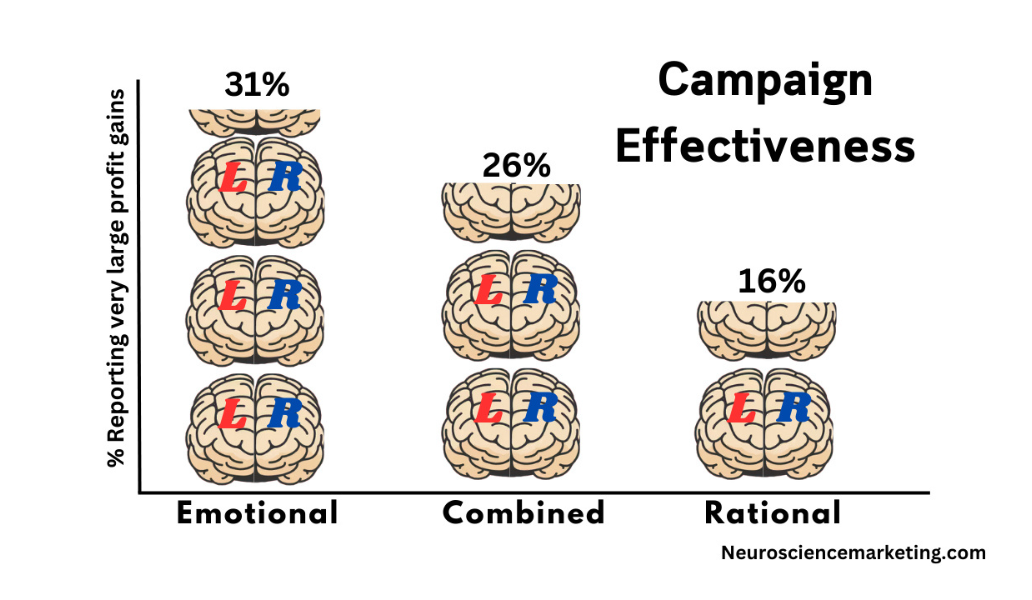
Image Credit: www.neurosciencemarketing.com
Using jargon that alienates your audience creates unnecessary barriers between your brand and potential customers. In surveys, a high proportion of readers report leaving content because it uses too much specialist language or jargon. Your copywriting blueprint should reflect this reality with specific emotional messaging strategies.
Your copywriting blueprint should establish:
- Industry terms that require translation or definition
- Acceptable technical terminology based on audience knowledge
- Alternative phrasing for common industry jargon
- Context-specific guidance (e.g., when technical terms are appropriate)
- Examples of translation from technical to accessible language
Companies like Apple demonstrate the power of accessible language in their copywriting blueprint. Rather than describing "802.11ac Wi-Fi capability," they simply promise "the fastest Wi-Fi connections." Your blueprint should similarly prioritize clarity over complexity.
Case Studies: Successful Brand Messaging Copywriting Blueprints in Action
Examining real-world examples of exceptional brand messaging provides valuable context for your own copywriting blueprint development. These case studies illustrate how comprehensive messaging frameworks translate into market success.
Case Study 1: Mailchimp's Distinctive Voice Transformation
Mailchimp, the email marketing platform, offers a masterclass in developing a distinctive brand voice through a comprehensive copywriting blueprint. Their journey from generic tech company to beloved brand with personality demonstrates the power of deliberate messaging architecture.
The Challenge: As Mailchimp grew from a small startup to serving millions of customers, they needed to scale their distinctive voice while maintaining consistency across an expanding content team.
The Solution: Mailchimp developed one of the most comprehensive public content style guides in the industry, essentially publishing their copywriting blueprint. This document details:
- Voice characteristics (clear, genuine, and occasionally surprising)
- Tone adaptations for different contexts
- Specific word choice and grammar conventions
- Guidance for writing about customers and their businesses
Key brand messaging principles from their blueprint include:
1. Speaking like a knowledgeable friend, not a robot
2. Using humor strategically but not at the expense of clarity
3. Respecting the seriousness of customers' business needs
4. Using simple language even for complex concepts
5. Writing inclusively for audiences with diverse backgrounds
The Results: This clearly defined copywriting blueprint enabled Mailchimp to:
- Maintain consistent messaging despite growing from 4 to 1,000+ employees
- Successfully expand beyond email into full marketing platform without losing brand identity
- Achieve 98% brand recognition in their target market
- Support a successful rebrand that expanded their customer base while retaining loyal users
By codifying their voice into a blueprint, Mailchimp streamlined content creation, minimized revision cycles, and empowered a growing team to speak with one voice—consistently and effectively.
Case Study 2: Dollar Shave Club's Disruptive Messaging Strategy
Dollar Shave Club revolutionized the men's grooming industry not through product innovation, but through a disruptive copywriting blueprint that challenged category conventions.
The Challenge: Enter a market dominated by established giants like Gillette with vastly larger marketing budgets.
The Solution: Dollar Shave Club created a copywriting blueprint centered on brutal simplicity and irreverent authenticity. Key elements included:
- Direct, conversational language that rejected industry pretentiousness
- Explicit rejection of "shaving technology" messaging in favor of value and convenience
- Consistent use of humor that connected with target demographic
- Ultra-simplified product descriptions and benefit statements
- Founder-forward messaging that personified the brand
Their copywriting blueprint established these messaging pillars:
1. Shaving is mundane, not magical (countering competitor messaging)
2. Simplicity is preferable to complexity
3. Value comes from eliminating unnecessary costs
4. Male grooming should be discussed straightforwardly, not with pseudo-science
The Results: This clearly defined messaging approach delivered:
- A launch video that generated 12,000 orders within 48 hours
- Growth to over 3.2 million subscribers
- Successful acquisition by Unilever for $1 billion
- Recognition as one of the most successful direct-to-consumer brands
Dollar Shave Club's CMO has credited their consistent messaging framework as the key differentiator in an industry where product differentiation was minimal. Their copywriting blueprint enabled them to maintain this disruptive voice even as they scaled rapidly.
Case Study 3: Airbnb's Community-Centric Messaging Framework
Airbnb transformed the hospitality industry by developing a copywriting blueprint that centered on belonging rather than traditional travel messaging.
The Challenge: Establish trust in a business model that required strangers to stay in each other's homes, a concept that violated conventional safety wisdom.
The Solution: Airbnb developed a sophisticated copywriting blueprint built around the concept of belonging. Key elements included:
- Consistently positioning hosts (not Airbnb) as the heroes of their story
- Language frameworks for describing spaces in terms of personal connection
- Carefully calibrated messaging around trust and safety
- Community-focused terminology that repositioned the transaction as belonging, not just accommodation
- Systematic approach to localizing their message while maintaining brand consistency
Their copywriting blueprint established these principles:
1. Focus on personal connection over transactional relationships
2. Highlight unique, authentic experiences over standardization
3. Use inclusive, community-oriented language
4. Balance aspirational messaging with practical trust markers
5. Celebrate the individuality of hosts and spaces
The Results: This comprehensive messaging framework delivered:
- Growth to over 7 million listings worldwide
- Successful expansion into experiences beyond accommodation
- Brand recognition that transcends category (like "Google" for search)
- Resilience through significant industry challenges, including regulatory issues
By documenting their messaging principles, Airbnb was able to maintain a consistent voice across 191 countries—while still resonating locally in every market they entered.
Tools and Resources for Developing Your Brand Messaging Copywriting Blueprint
Creating an effective copywriting blueprint behind strong brand messaging requires the right resources. These tools help systematize your approach, ensuring consistency and quality across all brand communications.
Brand messaging worksheet templates provide structured frameworks for developing key messaging components. These worksheets guide your team through critical thinking exercises that crystallize brand identity and messaging architecture.Brand messaging worksheet templates provide structured frameworks for developing key messaging components. These worksheets guide your team through critical thinking exercises that crystallize brand identity and messaging architecture.
Valuable worksheets to utilize include:
1. Brand Voice Chart: Defines your voice characteristics along with "We are/We aren't" statements and examples
2. Messaging Hierarchy Worksheet: Maps primary, secondary, and tertiary messages to different audience segments
3. Benefit Ladder Template: Helps translate features into functional benefits and emotional payoffs
4. Competitor Messaging Analysis: Identifies messaging gaps and differentiation opportunities
5. Customer Journey Message Map: Aligns content with specific customer journey stages
Structured tools like these reduce ambiguity, prevent messaging drift, and help teams stay aligned—even as content demands grow. In contrast, unstructured processes often result in fragmented communication and inconsistent brand messaging.
Copywriting blueprint software and platforms streamline the creation, distribution, and maintenance of your messaging guidelines. These digital tools make your blueprint more accessible and actionable across your organization.
Valuable platforms include:
- Frontify: Comprehensive brand management system including voice and tone guidelines
- GatherContent: Content production platform with templates enforcing brand messaging standards
- Grammarly Business: AI writing assistant that can be calibrated to your brand voice
- Hemingway Editor: Readability tool that helps maintain appropriate complexity levels
- Airtable: Customizable database for managing messaging elements and examples
Organizations that implement digital brand management systems report saving an average of 28 hours per month on content production—thanks to increased efficiency and fewer revision cycles. These tools don’t just support consistency; they also speed up delivery and reduce content bottlenecks.
Books and courses provide valuable perspective and frameworks for developing your copywriting blueprint. These resources offer proven methodologies that can be adapted to your specific brand context.
Recommended resources include:
- "Building a StoryBrand" by Donald Miller (framework for customer-centric messaging)
- "Everybody Writes" by Ann Handley (practical writing guidance for brand communicators)
- "Brand Against the Machine" by John Morgan (differentiation strategies for brand messaging) Nielsen Norman Group's
- "Writing for the Web" course (research-based approach to digital content) "Finding Brand Voice" workshop by Margot Bloomstein (structured approach to voice development)
Teams that engage with professional development resources consistently produce higher-performing content with fewer revision cycles, according to industry research. Ongoing learning sharpens instincts, refines strategy, and elevates overall content quality.
Communities and forums connect you with fellow brand messaging professionals for feedback and inspiration. These collaborative spaces provide valuable perspective on your copywriting blueprint development.
Valuable communities include:
- ConvertKit's Craft + Commerce community (content creators focused on brand building)
- MarketingProfs' forums (marketing professionals discussing content strategy)
- Content Marketing Institute's community (content-focused marketers sharing best practices)
- LinkedIn groups focused on brand strategy and content development Industry-specific writing communities relevant to your sector
Research on high-performing teams suggests that organizations that tap into professional communities while developing their frameworks are more likely to adopt innovative messaging strategies and avoid typical missteps. Collaborating with others enhances clarity, speeds up problem-solving, and fuels creative thinking.
How to Implement Your Copywriting Blueprint Across Your Organization
Even the most brilliant copywriting blueprint delivers zero value if it isn't effectively implemented. Successful implementation requires systematic approaches to training, documentation, review processes, and blueprint evolution.
Training team members on your brand messaging guidelines transforms your copywriting blueprint from a static document into living organizational knowledge. This training ensures consistent application across departments and external partners.
Effective training approaches include:
1. Role-specific workshops tailored to how different teams use the blueprint (marketing vs. customer service vs. product teams)
2. Before/after examples demonstrating messaging transformation when blueprint principles are applied
3. Interactive exercises where participants practice applying guidelines to real content challenges
4. Certification programs that verify understanding of key messaging principles
5. Regular refresher sessions addressing common implementation questions and evolving guidelines
Studies on brand communication suggest that teams who receive hands-on voice training achieve stronger messaging consistency than those relying on written guidelines alone.
Creating accessible documentation ensures your copywriting blueprint remains useful over time, rather than gathering dust on a digital shelf. This documentation should evolve from comprehensive reference into practical working tools.
Effective documentation approaches include:
- Tiered documentation with quick-reference guides supporting more detailed resources
- Interactive digital platforms rather than static PDFs
- Visual documentation using flowcharts and decision trees for complex guidelines
- Real examples library showing guidelines applied across different contexts
- Search functionality allowing users to quickly find relevant guidance
Teams are far more likely to use and maintain brand guidelines when they’re interactive and easy to explore — for example, through digital style guides or clickable reference tools. Whenever possible, make your copywriting blueprint a living document rather than a static PDF.
Establishing review processes ensures ongoing compliance with your brand messaging guidelines. These processes provide quality control while identifying areas where your copywriting blueprint might need clarification.
Effective review approaches include:
1. Progressive responsibility model where experienced writers require fewer reviews
2. Peer review systems that spread knowledge and build community around your standards
3. Checklists and rubrics making reviews objective rather than subjective
4. Feedback loops where common issues inform blueprint refinements
5. External perspective checks from audience members or industry experts
Managing updates and evolutions to your copywriting blueprint ensures it remains relevant as your brand and market evolve. A static blueprint quickly becomes obsolete in today's dynamic business environment.
Effective update approaches include:
- Scheduled quarterly reviews of blueprint effectiveness
- Clear ownership of blueprint sections by relevant experts
- Version control system documenting changes and rationales
- Framework for evaluating proposed additions or modifications
- Regular audience testing to validate messaging effectiveness
Future Trends in Brand Messaging and Copywriting Blueprints
As communication channels and consumer expectations evolve, forward-thinking brands must anticipate how these changes will impact their copywriting blueprints. Understanding emerging trends allows you to future-proof your brand messaging framework.
AI and automation in copywriting are rapidly transforming how brands create and optimize content. Your copywriting blueprint should establish guardrails for these technologies while leveraging their strengths.
Key considerations for your blueprint:
- Guidelines for when AI-generated content is appropriate vs. when human writing is essential
- Prompt engineering standards that maintain brand voice when using AI tools
- Quality control processes for reviewing and refining AI outputs
- Ethical standards for AI usage and appropriate disclosure
- Training protocols for using AI to enhance rather than replace human creativity
By proactively integrating AI considerations into your copywriting blueprint, your brand can maintain consistency while benefiting from increased efficiency.
Personalization and dynamic content enable increasingly tailored messaging experiences. Your copywriting blueprint must balance personalization with brand consistency.
Future-focused blueprint elements include:
1. Modular content frameworks that allow personalization while maintaining brand voice
2. Variable messaging hierarchies based on audience segments and behaviors
3. Personalization boundaries defining which elements can vary and which remain constant
4. Ethical guidelines for data usage in personalized messaging
5. Testing protocols for measuring personalization effectiveness
According to Epsilon’s The Power of Me Report, 80% of consumers say they’re more likely to purchase from brands that offer personalized experiences. At the same time, research across the marketing industry shows that audiences increasingly expect personalization — but only when it’s done with transparency and respect for privacy.
Voice search optimization requires adapting your brand messaging for conversational contexts. As voice interfaces become increasingly common, your copywriting blueprint should include guidance for this growing channel.
Voice-specific considerations include:
- Natural language patterns that work well in voice contexts
- Question-and-answer frameworks optimized for voice search
- Conversational brand voice adaptations for voice interfaces
- Featured snippet optimization for voice-returned results
- Multi-modal content strategies that blend voice with visual elements
With voice assistants becoming part of everyday life, brands that adapt their messaging for spoken interactions will be better positioned to connect and compete.
Interactive and conversational brand messaging moves beyond static content toward two-way engagement. Your copywriting blueprint should establish guidelines for these dynamic exchanges.
Interactive messaging considerations include:
- Response frameworks for common customer queries and scenarios
- Brand voice adaptations for conversational interfaces like chatbots
- Escalation protocols for when automated responses are insufficient
- Consistent messaging across self-service and human support channels
- Guidelines for maintaining brand voice in user-generated content interactions
Research by Hubspot found that businesses using interactive content generate 2x more conversions than those using passive content alone. Your copywriting blueprint should embrace this shift toward conversation rather than broadcast messaging.
Conclusion: Building Your Brand Messaging Copywriting Blueprint
Throughout this comprehensive guide, we've explored every aspect of developing an effective copywriting blueprint behind strong brand messaging. This strategic framework isn't merely a nice-to-have, it's the essential architecture that ensures your brand speaks with clarity, consistency, and persuasive power across all touchpoints.
The journey to creating your copywriting blueprint begins with understanding your brand's core identity and your audience's needs. These foundational elements inform every subsequent decision, from your messaging hierarchy to your tone of voice guidelines. Without this clarity, even the most creative copywriting will lack strategic direction.
Once these foundations are established, your blueprint expands to include specific guidance for different content elements, compelling headlines, persuasive body copy, effective calls-to-action, all tailored to maintain consistent brand voice while performing their specific functions. This structural guidance ensures that anyone creating content for your brand can produce materials that strengthen rather than dilute brand perception.
The ultimate test of your copywriting blueprint is whether it enables your brand to speak with one voice while resonating with diverse audiences across varied contexts. When implemented effectively, your blueprint should make content creation more efficient while improving performance metrics across all channels.
Whether you’re building this from scratch or refining what already exists, working with a partner who understands both the strategic and creative layers of brand messaging can make the difference between being remembered or overlooked.
That’s exactly what we focus on at Contagia. Helping brands like yours find their voice, own their narrative, and express it consistently across every channel.
Want a second pair of eyes on your current messaging? Get a free brand audit and let’s see how we can align your words with your worth.
FAQ About Brand Messaging Copywriting Blueprints
How often should I update my copywriting blueprint?
Your copywriting blueprint should undergo minor reviews quarterly and a comprehensive evaluation annually. However, significant brand repositioning, market disruptions, or major product launches may necessitate immediate updates. Regularly revisiting and refining your messaging framework ensures it remains aligned with evolving audience expectations and market dynamics. The key is establishing a systematic review process rather than reacting to problems after they emerge.
Can small businesses benefit from a formal brand messaging framework?
Absolutely, sometimes even more than larger organizations. While small businesses may have fewer communication channels and content creators, they also have fewer resources to waste on ineffective messaging. A targeted copywriting blueprint helps small businesses maximize their limited marketing resources by ensuring every communication builds brand equity. A well-defined messaging framework helps small businesses communicate with clarity and purpose, making every customer interaction more impactful.
What's the difference between a copywriting blueprint and brand guidelines?
Brand guidelines typically focus on visual elements (logos, colors, typography) with limited attention to verbal communication. A copywriting blueprint specifically addresses written communication, providing detailed guidance on messaging strategy, voice, tone, and specific content types. While brand guidelines might include a brief section on "tone of voice," a comprehensive copywriting blueprint expands this into actionable frameworks for different contexts. The most effective approach integrates both into a cohesive brand system, ensuring visual and verbal elements work harmoniously.
How do I maintain consistent brand messaging with multiple writers?
This challenge underscores the importance of a well-documented copywriting blueprint. Beyond creating the blueprint itself, implementation requires:
1. Thorough training for all content creators
2. Accessible reference materials with concrete examples
3. Clear review processes for ensuring compliance
4. Feedback mechanisms to address common questions
5. Regular calibration sessions to align understanding
When content creators have access to clear documentation and hands-on training, they’re able to produce stronger first drafts—reducing back-and-forth edits and ensuring your brand voice stays intact from the start. Your blueprint should include specific guidance for onboarding new writers to maintain consistency as your team grows or changes.
Should my copywriting blueprint change for different international markets?
Your core brand positioning and values should remain consistent globally, but your copywriting blueprint should include guidance for appropriate cultural adaptations. This isn't simply about translation but about cultural resonance. Your blueprint should identify which elements are fixed globally and which can flex for local markets. A 2020 study by CSA Research found that 76% of online shoppers prefer to buy products with information in their native language, and 40% will not buy from websites in other languages. An effective international copywriting blueprint balances global consistency with local relevance.
How long does it take to develop a comprehensive copywriting blueprint for brand messaging?
Creating a thorough copywriting blueprint typically requires 2-4 months, depending on your organization's size and complexity. This timeline includes research, stakeholder interviews, draft development, review cycles, and finalization. Rushing this process often results in superficial guidelines that don't provide adequate direction. However, you can implement the blueprint in phases, beginning with core elements like brand positioning and voice characteristics, then expanding to more detailed guidance for specific content types and channels. This phased approach delivers value more quickly while still building toward comprehensive documentation.